
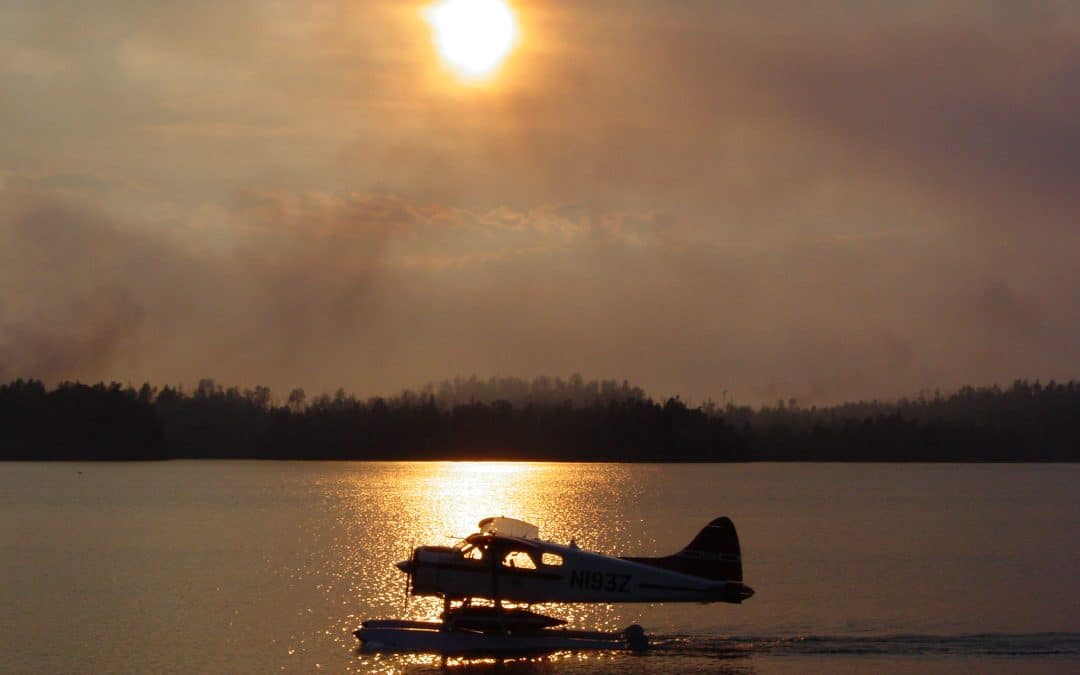

Photo courtesy of the US Forest Service.
There’s continued speculation about what the fire season will be like across the Boundary Waters this paddling season. The lack of snow and seasonably mild temperatures throughout the winter has led to speculation that 2024 could be a dramatic year for wildfire across Superior National Forest, including the Boundary Waters Canoe Area Wilderness. The dry winter comes on the heels of last summer and fall when most of Minnesota, including the Boundary Waters, was plagued by drought conditions.
A lack of snowfall in the winter doesn’t always equate to a season of extreme wildfires. For example, steady rain or mixed precipitation (rain, snow, freezing rain) before the paddling season begins could help reduce the potential for wildfires across the BWCA and Quetico this year.
Float planes and other aircraft are tools the Forest Service uses to fight wildfires across the BWCA. Float planes, known commonly as “beavers,” are also used, on occasion, to assist people during search and rescue operations.
In this report, Paddle and Portage shares a conversation with the chief pilot and supervisor for the Eastern Region Beaver Program for the US Forest Service based at the Superior National Forest seaplane base in Ely, Minn, as well as the Eastern Regional aviation officer for the US Forest Service based in Milwaukee.