
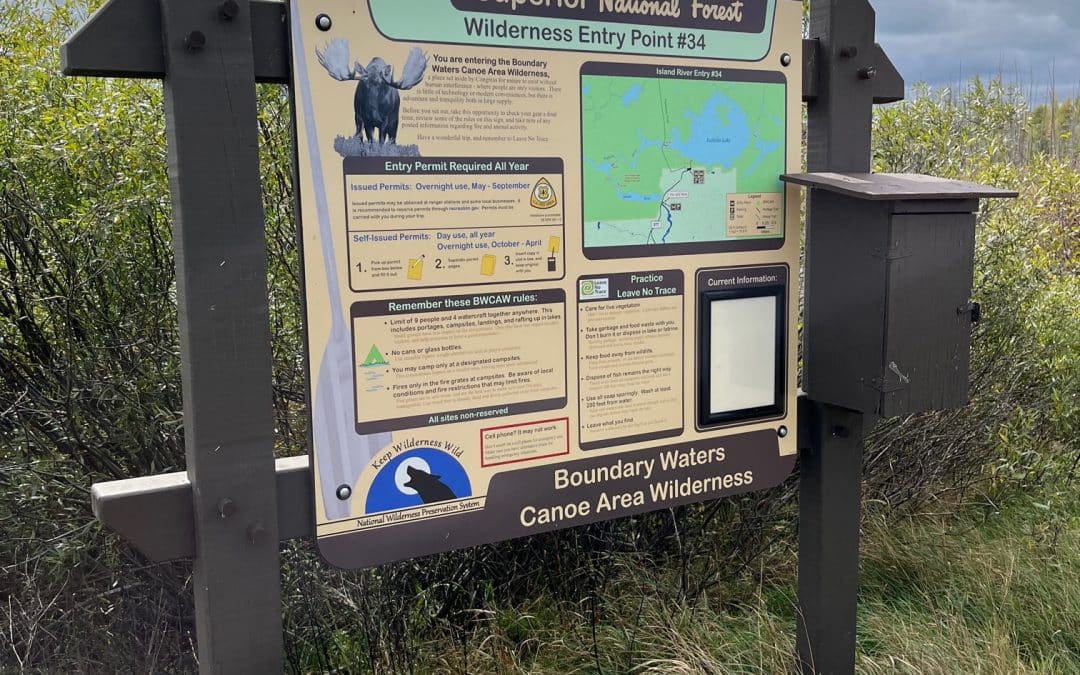

Photo courtesy of Superior National Forest
Opinions Vary for BWCA Management as Public Input Phase Wraps Up

By Joe Friedrichs
The U.S. Forest Service continues to gather input from the public regarding management of the Boundary Waters Canoe Area Wilderness. This initial phase of “we want to hear from you” started March 29 and ends today (May 17).
As of 5 p.m., there were 83 comments submitted.
Comments were submitted from paddling enthusiasts, politicians, canoe outfitters, mining supporters, and environmental organizations, among others.
Click here to read the comments.
Though the comments varied, repeated themes include the newly enacted food storage order, motorboats and tows in the wilderness, the number of permits and campsites in the BWCA, and mining on the edge of the wilderness.
The use of motorboats on certain lakes in the Boundary Waters Canoe Area Wilderness is among a list of topics the U.S. Forest Service says it plans to review and likely change within the next two years.
Other things the Forest Service could address in terms of how it manages the BWCA are changing (reducing or increasing) the number of campsites in the designated wilderness and changing the number of permits that are available annually for those who visit the most popular wilderness area in the nation.
Changes to the agency’s forest plan directive can better position the Forest Service to restore and preserve wilderness character and meet the purposes of wilderness described in the 1964 Wilderness Act and subsequent BWCA Wilderness Act from 1978, according to Tom Hall, the forest supervisor for Superior National Forest. The management direction for the BWCA was last updated in 1993, Hall said in a press release this spring.
“Our implementation and monitoring over the past 30 years, and changes to national wilderness management policy and guidance, has highlighted several issues affecting wilderness character in the BWCAW and the wilderness experience for visitors,” Hall said.
Forest Service officials maintain that many BWCA entry points and associated routes are regularly experiencing social resource concerns such as crowding, disruptive and oversized groups, lack of campsite availability or unsettling competition for campsites. Illegal camping is also becoming more of a problem in the BWCA.
Additional management topics include, but are not limited to: fisheries stocking, survey and spawn take; commercial outfitter and guide operations; visitor use management (overnight paddle and hiking quota, campsites); special provisions; structures; other agency use; wilderness education plans; the reservation system; and research needs.
Based on public comments and input, as well as applicable law, regulation, policy, and guidance, the Forest Service will develop a proposed “forest plan amendment” to address the purpose and need for action.
Based on the current management situation and given that the “forest plan” direction for the BWCA is more than 30 years old, the Forest Service says they are “considering making an amendment to update and modernize Forest Plan direction” for the BWCA. Any updates to the plan are likely to be complete by April 2026, according to the project’s website.
Other Recent Articles

Forest Service Enacts Campfire Ban in BWCA Wilderness Starting June 6
A campfire ban for the BWCA Wilderness goes into effect June 6. Photo by Erik Dickes Campfires in the Boundary Waters Canoe Area Wilderness will temporarily be banned starting Saturday, June 6. The campfire ban is currently scheduled to be in place until June 30....

No RABC Permit, No Problem: Telephone Reporting Sites Go Live in Quetico in June
Quetico entrance at Cache Bay. Photo by Joe Friedrichs Paddlers will be able to enter Quetico Provincial Park at the Prairie Portage and Cache Bay ranger stations using the new telephone reporting sites starting next month. Paddle & Portage media spoke to...

Helium Exploration Rolls Along Near the Boundary Waters
Looking for helium near the Boundary Waters. Photo courtesy of Pulsar Helium Deposits of helium found near the Boundary Waters remain a quiet talking point amongst industry insiders, state and federal regulators, politicians, and others interested in the future of how...