

Cisco are treasures of the Boundary Waters. Images by Chad Kieper
News
Cisco: The Little Fish with a Big Impact

By Chad Kieper
GUNFLINT TRAIL – The Canadian Shield is a massive region of exposed ancient bedrock that extends from the Great Lakes to the Arctic Circle. It is the geologic heart of North America, and is a land born of fire and ice. Over tens of thousands of years, waves of glaciers scoured this area, laying bare the foundation of our continent, and leaving behind a mosaic of vast lakes, ponds, swamps and waterways. Today a large swath of this landscape is covered by the great Boreal forest, which itself has been sculpted through frequent fires and disturbances (natural or otherwise). For those who have visited this area, your mind will immediately conjure up visions of pristine lakes filled with tannin-stained water, towering conifers whistling in the breeze, rugged rocky shorelines, and exposed cliffs.
If you ask people to recite their favorite critters living in these Northwoods, the majority will likely proclaim moose, wolves, lynx, black bear, etc. A few might throw out a tongue-in-cheek reference to everyone’s least favorite resident, the mosquito. And indeed, all of these would be correct.
However, in the deep, cold lakes of the Canadian Shield, there are equally dynamic species living below the waves. Two of the most iconic are the lake trout and the cisco. These fish have been engaged in a predator/prey relationship since the end of the last glaciation. Lake trout are a powerful, hard-fighting, tasty game fish, and a lot has already been said about them, including in this publication and on the Paddle and Portage Podcast. The goal of this article is not to shine more light on ‘lakers’, but rather give love to an unsung hero, the humble cisco. It is not an overstatement to suggest lake trout would not exist in their current abundance, distribution, and size if it were not for these astounding little fish.
To continue reading, login below or sign up here.
Other Recent Articles
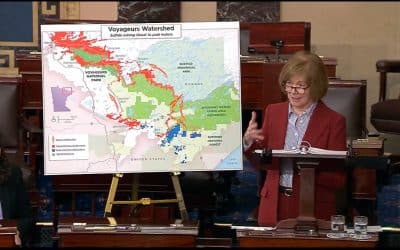
U.S. Senate Grapples With Mining Ban Near the BWCA Wilderness
U.S. Sen. Tina Smith talks April 15 on the Senate floor about her concerns for lifting a mining ban near the BWCA. Image courtesy of the U.S. Senate UPDATE: The U.S. Senate today (April 16) approved a resolution that would lift a mining ban from an area near the...

Stauber Cites Iran War as Another Reason to Build a Mine Near the Boundary Waters
Congressman Pete Stauber (center with cap on) and District 3A Rep. Roger Skraba talk with BWCA business owners at Crane Lake in fall 2025. Photo by Joe Friedrichs UPDATE: It's possible (even likely) the U.S. Senate will vote on Stauber's resolution as soon as...

What Forest Service Headquarters Moving to Utah Means for the Boundary Waters
Information kiosk near the Tofte Ranger Station. April 2026 photo by Joe Friedrichs The federal government announced this week it is moving the headquarters for the U.S. Forest Service from Washington, D.C. to Salt Lake City. As part of the move, the Forest Service...