


Winter camping is popular in the BWCA Wilderness. A bill proposed in the U.S. Senate could alter the landscape and vibe of the wilderness during all seasons. Photo courtesy of D. Disch, U.S. Forest Service on Superior National Forest
Proposed Law Could Alter the BWCA Wilderness Landscape, Vibe

By Will Matuska
ELY – Alex Hopkins describes mastering the J-stroke as being a pivotal moment in his life.
“That basically started a decade-plus-long love affair with what I think is the most beautiful place in the world,” Hopkins said.
Now in his early 30s, Hopkins was fresh out of high school when he learned the famous paddle stroke used by many visitors to the Boundary Waters Canoe Area Wilderness. And despite figuring out how to keep a canoe’s bow pointed straight, he still finds himself circling around to where he first paddled. He’s been back nearly every year since.
“[The Boundary Waters is] part of my identity,” he said. “Anyone who knows me knows it’s kind of a big part of it.”

Alex Hopkins in the BWCA, summer 2025. Submitted photo
Hopkins lives in North Carolina, but he still finds ways to get back to the northern Minnesota woods and lakes nearly every year. He talked about the “profound impact of silence” he receives from being in the backcountry, and how he uses that time as other paddlers might: to recenter, reset, recharge.
Eager to share the landscape and its resonance, he brought his son with him there for his first birthday.
“We didn’t do anything crazy,” he said. “But I did get him in a canoe for about 20 minutes and we paddled around.”

Alex Hopkins (closest to sign) paddles in the BWCA. Submitted photo
Hopkins thinks of the BWCA Wilderness as a protected place, though he knows about the ongoing threats from things like copper-nickel mines being proposed near the wilderness. This fall, though, something new surfaced that got his attention. Outdoor enthusiasts and paddlers like Hopkins are befuddled by a proposed bill in the U.S. Senate that could alter the wilderness in the name of border security.
The Border Lands Conservation Act, proposed by Utah Sen. Mike Lee, would allow the Department of Homeland Security to increase its activities on federal lands, including National Parks and Wilderness Areas, within 100 miles of both the northern and southern borders. If passed, the bill would make an amendment to the 1964 Wilderness Act to allow increased surveillance, tactical infrastructure like roads and fences to be built, and allow motorized equipment for surveillance purposes, including aircraft.
The bill represents the latest move in a national trend challenging public lands. The Trump administration has pushed to expand resource extraction and roll back environmental protections since first taking office, all while carving up public land management agencies with layoffs and budget cuts. The administration cites a need for critical minerals when it comes to why they support a copper-nickel mine near the BWCA. Border security is the main selling point when it comes to the bill proposed in the U.S. Senate. Lee also proposed selling millions of acres of public land earlier this year, which he eventually withdrew due to bipartisan opposition.
Hopkins said Lee’s first bill proved him to be “not a very strong advocate” for public lands.
“I think we all go up there because it’s a break from everything else, and to allow that everything else to invade that space is not progress, that’s going backwards,” Hopkins said.
Border Security
Lee introduced the Border Lands Conservation Act as a border-security initiative.
“Biden’s open-border chaos is destroying America’s crown jewels,” he said in a statement. “This bill gives land managers and border agents the tools to restore order and protect these places for the people they were meant to serve.”
The bill would impact any land owned by the U.S. government sharing a boundary with the southern or northern border. In Minnesota, this includes places like the BWCA Wilderness (though technically Isle Royale is in Michigan), Voyageur’s National Park, and Superior National Forest, totaling more than 4 million acres.
In addition to increased border protection on federal lands, the bill aims to establish a fuels management initiative to combat risks of wildfires, one of the environmental issues raised by supporters in the Senate that they say is heightened by illegal immigration.
The bill has waited to be reviewed by the Committee on Energy and Natural Resources since its October introduction, where it needs to pass its first vote.
U.S. Rep. Pete Stauber, who chairs the Subcommittee on Energy and Mineral Resources and represents Minnesota’s 8th Congressional District, has voiced support for the bill. He recently said the bill would prevent similar damage he’s seen on the U.S.-Mexico border from happening in wilderness areas like the BWCA. The damage includes things like trash being left in the woods, human waste scattered about the forest floor and in waterways, and abandoned campfires.

U.S. Rep. Pete Stauber talks with BWCA outfitters at an event near the U.S.-Canada border in fall 2025. P&P file photo
Stauber has previously raised concern over illegal immigration at the northern border, suggesting that it could become a hotspot for illegal migration now that the southern border is “closed.”
Stauber didn’t respond to multiple interview requests from Paddle and Portage for this article.
Meanwhile, government data is vague when it comes to federal agencies apprehending people at the Minnesota border with Canada. A P&P analysis of U.S. Customs and Border Patrol data shows an average of approximately 1,000 “encounters” on Minnesota’s northern border over the past three years. Nationwide, northern border encounters during the same period have dropped more than 50 percent, from about 190,000 in 2023 to 85,746 in 2025. The Canadian government reported illegal crossings from Canada to the U.S. were down 99 percent in July 2025 from peak levels in June 2024.
Regardless, since its introduction, Lee’s bill has stirred up opposition across the nation from outdoor, wildlife and conservation groups, as well as advocates concerned about environmental degradation, loss of wilderness protections, and the undermining of existing federal land management departments. Among the groups opposed is the Minnesota-based Sportsmen for the Boundary Waters.
“Not only does Sportsmen for the Boundary Waters disapprove of building additional infrastructure within the BWCA, we oppose altering the Wilderness Act to permit this kind of infrastructure in any wilderness area,” the organization wrote in a statement. “The Border Lands Conservation Act would unravel the foundation on which wilderness areas are built, and we will oppose this legislation at every opportunity.”
The Boundary Waters Vibe
Mary Batinich owns and operates the Vermilion Park Inn off the Voyageur Highway in Soudan — a cozy stay for travelers preparing to enter the wilderness. The Inn is located just south of the BWCA Wilderness, not far from Ely. The remoteness of the area is what helps draw people to stay with her and sustain the business, Batinich told P&P.
“This is such a rare asset in the world,” she said. “Because of my little bed and breakfast here, we have people coming in from all over the world just to go to the Boundary Waters. There’s not a lot of wilderness in the world that’s so open and unpenetrated the way we’ve kept it all these years.”
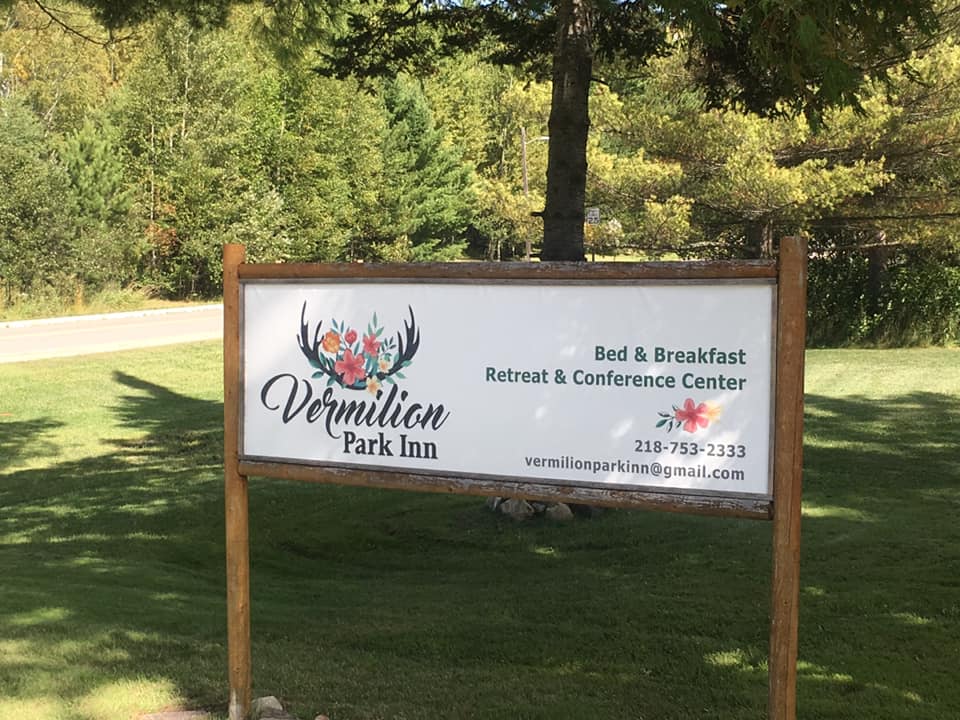
Businesses large and small provide services to BWCA paddlers. Submitted photo
When asked about the prospect of increased activity in the Boundary Waters and other federal lands proposed by the Border Lands Conservation Act, Batinich questioned the need. If they’re looking for criminals or illegal border crossings, they’re not likely to find many, she explained.
“They will get a lot of pictures of moose and bear,” Batinich said.
As for Hopkins, he says he is planning to return to the BWCA Wilderness as a guide next summer for the same southern Ohio high school group he was part of for his first visit to the Boundary Waters back when he was a teenager learning the J-stroke. He’s led the group for years. Most of the students haven’t been in a true wilderness before, which allows him to relive that feeling of his first paddle.

Alex Hopkins (right) in the BWCA, summer 2025. Submitted photo
“Going back to the same rocks that we would jump off of, the same sounds and smells, it brings me back to those first couple trips where I was really falling in love and experiencing it for the first time,” he said.
Looking forward, Hopkins wants to keep sharing the place as it is — a hope that grows more personal when he imagines bringing his family.
“I have a young son who I am excited to bring up there,” he said. “And the idea of doing that with those kind of physical changes in the background is not what I want his experience to be. I want his experience to be like mine.”
Subscribe to Paddle and Portage to support this type of journalism from and about the Boundary Waters.
Other Recent Articles

Minnesota Politics and the Future of the Boundary Waters
The BWCA remains the most visited wilderness in the nation. P&P file photo SAINT PAUL – Alex Falconer once ran across the Boundary Waters Canoe Area Wilderness. On Friday, May 1 he was stationary, taking questions from an ethics committee about his dual role as an...
Wilderness Watch Files Appeal on BWCA Towboat Ruling
The issue of towboats in the BWCA Wilderness is back in court . P&P file photo from Willy Vosburgh Environmental advocates want a federal appeals court to restrict the ability for people to use motorized boats in select areas of the Boundary Waters Canoe Area...

Permit Cancellations and No-Shows Continue to Dominate BWCA Visitor Report
Sign at an outfitter in Ely. Photo by Joe Friedrichs For the fifth consecutive year, the number of people cancelling a permit to the Boundary Waters Canoe Area Wilderness continued to climb, according to a new report from the U.S. Forest Service. Cancellations of BWCA...