

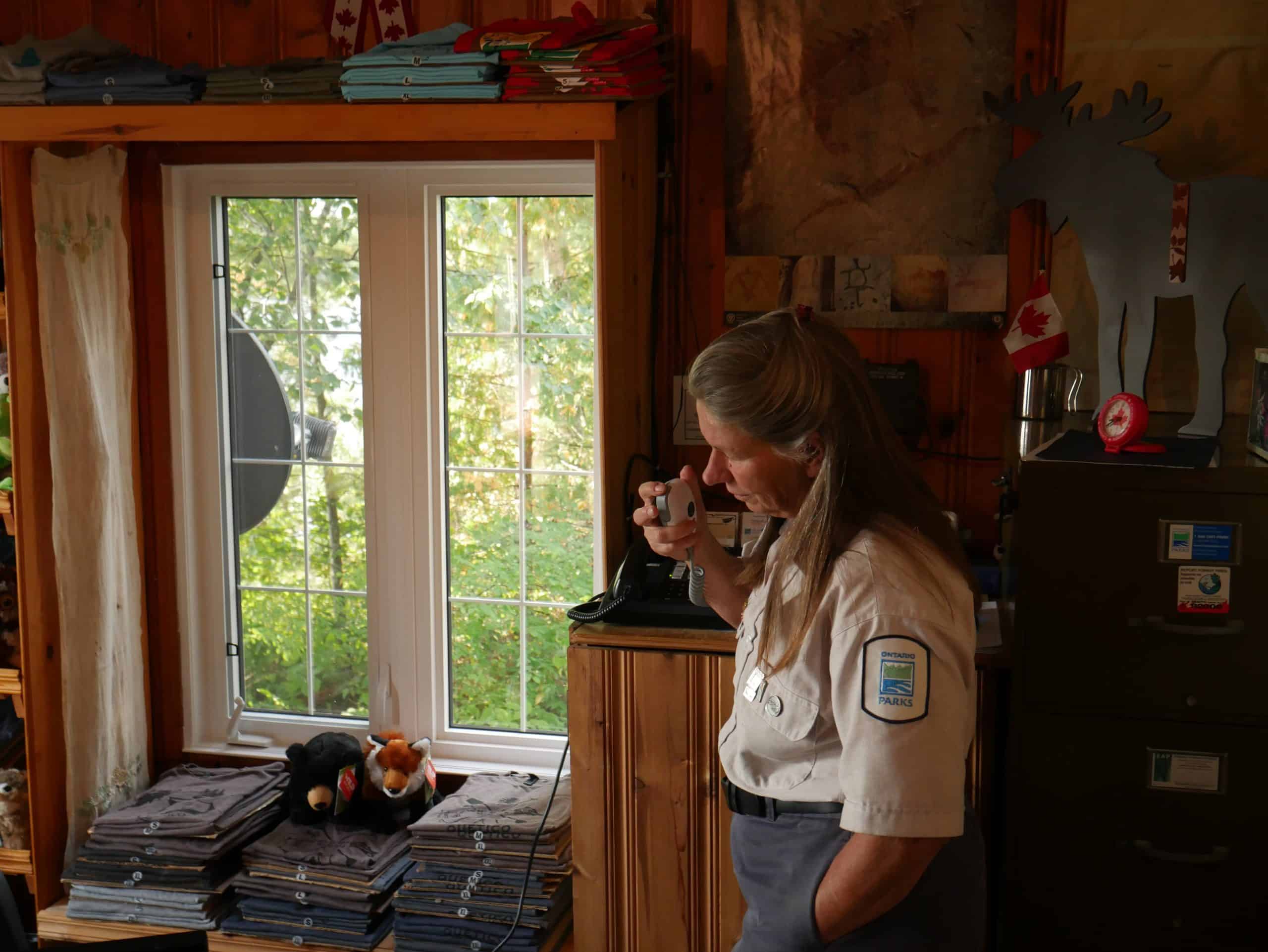
Janice Matichuk at Cache Bay in 2018. Photo by M Baxley
Canadian Officials Can Take a Lesson From the Late Janice Matichuk When it Comes to Communication

By Joe Friedrichs
GUNFLINT TRAIL – I was ice fishing in mid-December with a couple of friends when the topic of Remote Area Border Crossing (RABC) permits entered our conversation. The news about the program was unsettled as of that afternoon, leading to widespread concern across the region for a variety of reasons. Within a week, we had an answer about the future of the program. At the very least we have more clarity, as we recently reported.
During the course of the conversation, which took place on a frozen lake in the Mid-Gunflint Trail area, I brought up the fact that a lack of communication from Canadian officials was a major source of frustration regarding the future of the RABC Program. Nobody, from officials with the Canada Border Services Agency, to the Canadian consulate in St. Paul, to officials from Quetico Provincial Park, seemed willing to engage in a conversation about the future of RABC permits. No conversations with any substance to them, anyhow.
“You know who would have raised hell about all this?” I asked my fellow anglers.
After a brief pause, I named the person I had in mind.
“Janice Matichuk.”
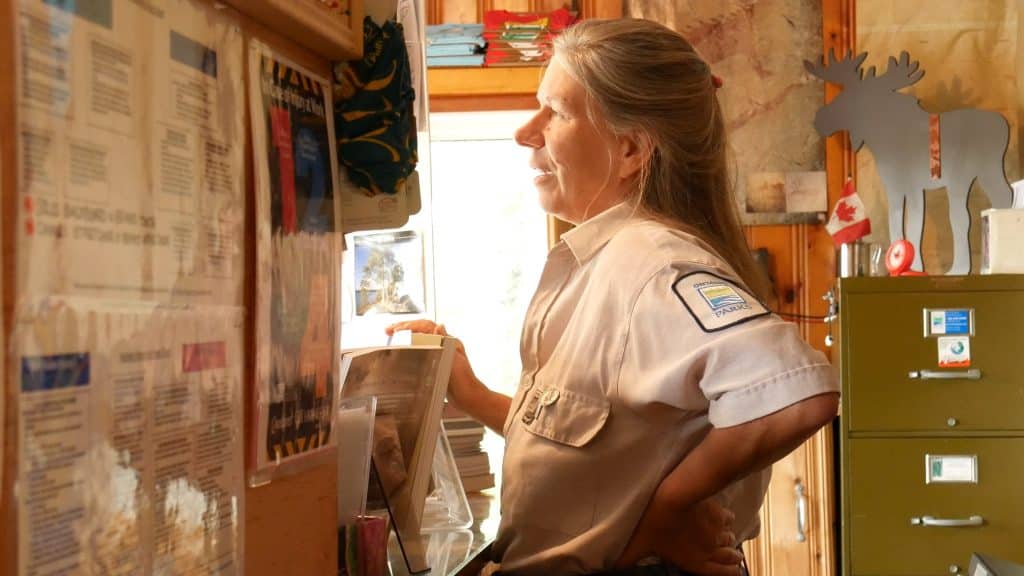
The late Janice Matichuk at her Cache Bay post. Photo by M Baxley
The dwindling numbers to the southern entrances to the park as a result of the upheaval and uncertainty of the RABC Program would have sent Janice, the longest serving ranger in the history of Quetico Provincial Park, into a spectacular rage. Janice loved Quetico, including Cache Bay, where she spent most of her 35 years working in the park. She is legendary among Quetico and Boundary Waters Canoe Area Wilderness paddlers, and in many ways her status as a Quetico icon has only increased since her passing in August 2020 from brain cancer.
Janice was a spirited ambassador for the park, and she didn’t suffer fools. She loathed poor communication. Illustrating this is the time Janice literally lost a finger while tying a rope to the dock at Cache Bay that was connected to a float plane. This was in September 2019. I was scheduled to visit Janice that very afternoon from my home in Grand Marais. As she was flown off the island to the emergency room in Thunder Bay, Janice made sure park headquarters called to tell me that she’d been injured and not to come to the island. Now that’s good communication, albeit slightly bonkers.
To think of Janice sitting by idly while CBSA sorted out the fate of the RABC Program is largely unthinkable. She would have been working the phones and sending emails and handwritten letters demanding answers. That’s how Janice rolled. She got things done. The fact people’s livelihoods were facing major disruption, many of whom were Janice’s friends from the Gunflint Trail and Saganaga Lake, would have only motivated Janice all the more to get answers from her fellow Canadians.
The RABC system has been in place for decades and has been effective in facilitating border crossings for individuals who live in remote areas and are unable to check in at an official point of entry. As we’ve reported over the past year, visitation declined dramatically in 2025 to Cache Bay and other access points to Quetico on the U.S.-Canada border. Visitors from Saganaga Lake at the end of the Gunflint Trail to the Moose Lake area on the Ely side of the wilderness (among other access points) use RABC permits to access Quetico without having to cross the border at a port of entry.
The Cache Bay Ranger Station is a rustic cabin located on a small, rocky island in the far reaches of Saganaga Lake on the Minnesota-Ontario border. It stands as the southeastern entry point to Quetico. It’s where park staff live for the season, and where, in most years, canoe parties check in at the beginning of their Quetico adventure.
For many paddlers who entered at Cache Bay between 1985 and 2019, Janice was part of the Quetico experience. She had a certain energy that worked for most people, though it probably overwhelmed a few along the way. Janice had a routine for first timers to the park, going over the park rules in fine detail, or at least her version of the park rules. She allowed some grace to regular visitors, including people who returned every paddling season, when it came to the rules and regulations sermon. She had a certain magic to her, and even though she’s been gone for more than five years, it’s still around.
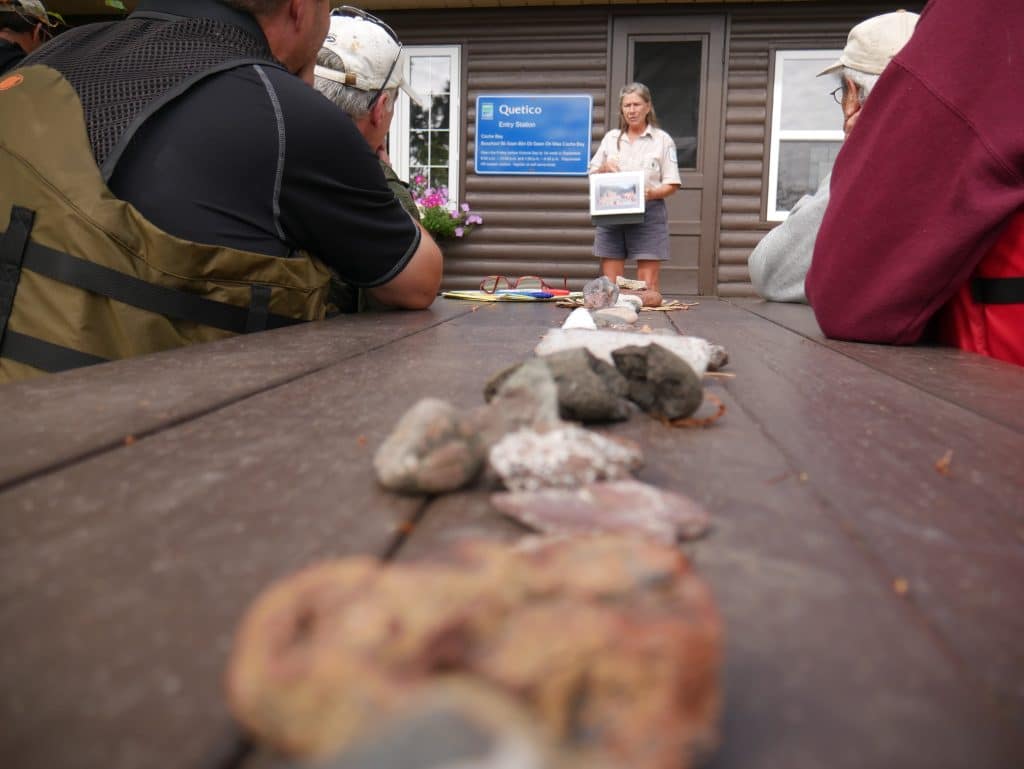
Janice talks Quetico rules and regs in 2018. Photo by M Baxley
This summer, for example, I met a man on a remote road (even by Boundary Waters standards) near the end of the Arrowhead Trail. The man’s name is Mike Dronen. My pal Michael and I were coming off a BWCA lake after fishing all morning when my vehicle, with a tandem Kevlar canoe strapped to the top, encountered Dronen’s on the narrow road. I didn’t know who Dronen was at that moment, having never met him before. After pulling up side by side, Dronen and I made small talk for a moment about the beautiful summer day. Soon thereafter, he asked if I was the one who wrote “Her Island,” the biography of Janice Matichuk. I told him I was and Dronen reached over to his empty passenger seat and picked up a book. It was a copy of “Her Island.”
“Will you sign this?” he asked.
I heard from Dronen Dec. 29 via email. It was the first time I’d heard from him since our chance encounter on the gravel road last summer.
“Like so many who had memories of time with Janice, that book holds a special place in my heart, and brought back those memories when I read it in one sitting,” Dronen wrote. “While she was there, most of my trips to the Quetico were during the fall shoulder season making it a unique time to hear stories of how the season had gone for her and park paddlers. I don’t think there was a face she ever forgot, and I think she held a unique respect for those who loved and respected wild places.”
Dronen’s dad introduced him to the BWCA/Quetico years ago, back when he was “a squirrely middle school kid,” he wrote.
“And like so many others, the rest was history,” he continued.

P&P file photo
The Cache Bay Ranger Station is a rustic cabin located on a small, rocky island in the far reaches of Saganaga Lake on the Minnesota and Ontario border. It stands as the southeastern entry point to Quetico. It’s where park staff live for the season, and where, in most years, canoe parties check in at the beginning of their Quetico adventure.
Many P&P readers may have had the opportunity to meet Matichuk during a trip through Cache Bay. If you did, you can likely remember the circumstances. You might recall her laugh, or her natural curiosity about your trip. Matichuk made it a point to get to know the paddlers who entered through Cache Bay. Quetico was her passion. She wanted to learn from you as much as she wanted to share her own stories. Her personality was simultaneously strong and tender. Above all else, when it came to paddlers who visited Quetico, she was inquisitive and interested.
Though she will be remembered by many for her ability to engage in lengthy conversations, Matichuk did not mince words or act delicately when it came to protecting the park and the people who visited it. She saved multiple lives in her decades working at Cache Bay. She made headlines with harrowing rescues on the mighty Sag, the deepest and largest of all the lakes in the BWCA Wilderness, and among the deepest in all of Quetico. Until the day she passed away, she had an edge of toughness in everything she did, though it did not define her. Instead, friends and colleagues speak first of her kindness.
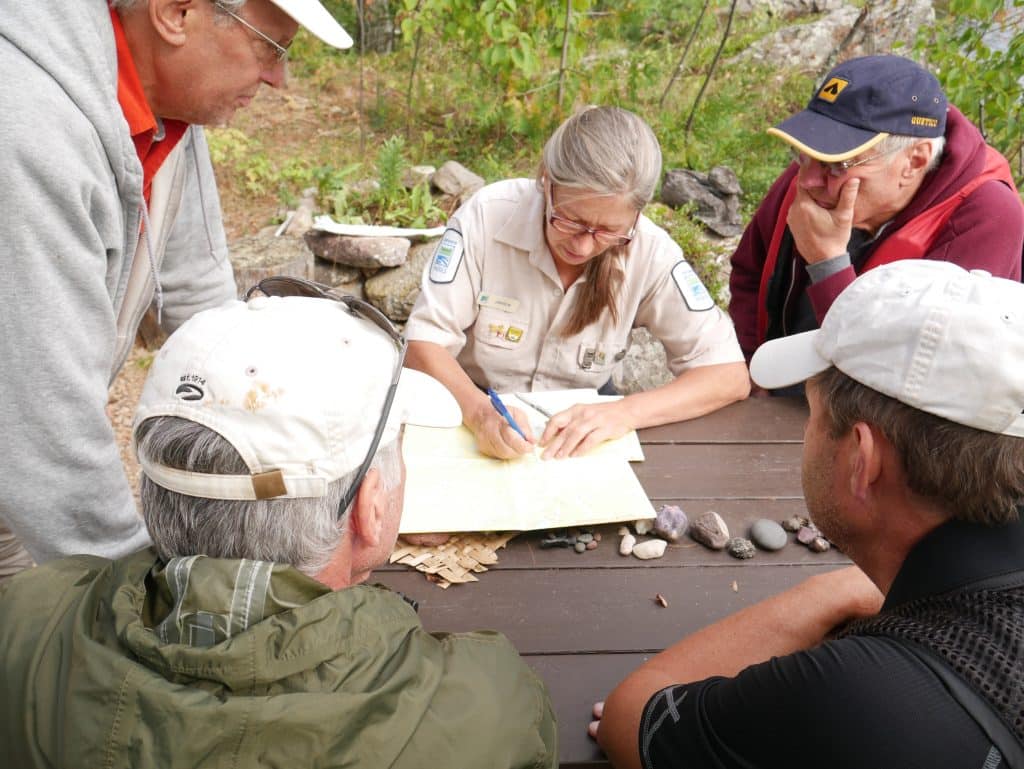
Janice reviews a Quetico map with some of her fans. Photo by M Baxley
Matichuk was 30 years old when she first arrived at Cache Bay. It was May 1985. For decades to come the island was both her office and seasonal home. It was also where she raised two children. It’s where she met canoe enthusiasts and outdoor adventurers from across the planet. It’s where Janice Matichuk became … Janice Matichuk.
“I remember walking from the plane up to the cabin … I remember it so well, because I just knew this is where I belong,” Matichuk told me in 2017 when I was at Cache Bay. “I had such a settling in my bones. Yep, this is where I belong. I just knew it.”
Following that September night at the ranger station in Cache Bay, I felt Matichuk’s story needed to be shared with a wider audience. She could only meet so many people each year at the remote outpost, and short features in a newspaper, magazine, or on the radio would not suffice. There was so much to share about Matichuk, not just in her time at the ranger station, but throughout the course of her unique life in northwestern Ontario.
Following Matichuk’s belief that tasks only get completed when somebody gets off their rear end and takes action, I started my research. For the next two years I dug deep, learning about the course of her life, conducting interviews and weaving together six decades to write the story of Janice Matichuk.
If the door opens to the Cache Bay Ranger Station for the 2026 paddling season, many will notice the numerous honors and awards hanging on the wall of park facility, including some of the most prestigious the Canadian government can issue to civilians or park employees. There are awards for bravery and achievement of varying degrees, though the name on each is the same: Janice Matichuk. There’s also a plaque standing on the island near the ranger station with her name on it, indeed referring to the place where it stands as “Her Island.”

P&P file photo by Joe Friedrichs
The RABC Program as it currently operates will close Sept. 14, 2026.
“As of (Sept. 14), all travelers entering Canada through remote areas of northern Ontario or from the Northwest Angle into southern Manitoba, must report to the CBSA at a port of entry or a designated telephone reporting site,” said Rebecca Purdy, a senior communications advisor.
Replacing the RABC Program with telephone reporting builds on processes already in place across Canada, CBSA officials told P&P earlier this month, where travelers are required to report to the CBSA from designated sites every time they enter Canada. The location of the new telephone reporting sites will be decided in the coming months in consultation with Indigenous communities, local businesses and law enforcement partners, according to CBSA. Cell phones will be allowed as part of the check-in process, CBSA officials told P&P.
Why did they tell us this? Because we asked them. Nearly constantly. For a year we sought answers to the future of the RABC Program. We were relentlessly pursuing information. It’s the way Janice would have done it, or at very least, wanted us to do it.
Subscribe to Paddle and Portage to support journalism from and about the Boundary Waters.
Other Recent Articles

Shug the Hammock Camper Diagnosed with Rare Form of Cancer
Shug (right) and M Baxley at the 2025 Winter Camping Symposium. Photo by Joe FriedrichsOur friend Shug found out this week he has a rare blood disease called chronic myeloid leukemia. Shug introduced the joys of hammock camping to people all over the world. His videos...

A Visit to Sigurd Olson’s Listening Point as Senate Nears Vote to Reverse Mining Ban
Photo from inside Sigurd Olson's house in Ely, now the headquarters for the Listening Point Foundation. Photo by Joe FriedrichsA bill that was introduced by a Minnesota Congressman to overturn a 20-year mining ban near the Boundary Waters is heading to the Senate...
Talking Boundary Waters Politics with Candidate for Minnesota Legislature
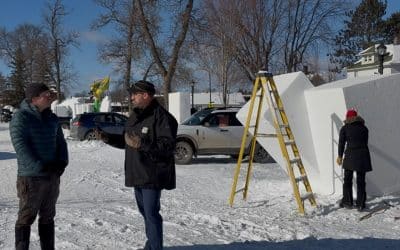
Joe Friedrichs (left) talks with Minnesota District 3A Candidate Aaron Kania during the Ely Winter Festival. P&P photoFresh off his retirement from the U.S. Forest Service, Aaron Kania announced in January 2026 his candidacy for the Minnesota House of...