


The BWCA food storage order is in effect from April 1 to Nov. 30 through 2031. Photo by Joe Friedrichs
Forest Service Extends Food Storage Order in BWCA Wilderness Until 2031

By Joe Friedrichs
BOUNDARY WATERS – A food storage order is being extended for another five years in the Boundary Waters Canoe Area Wilderness, plus, a new annual start date means it will have almost no impact on winter campers and ice anglers.
The U.S. Forest Service increased regulation on storing food in the BWCA in spring 2024 to try to prevent bears from associating human visitors in the wilderness with food. The original order started just ahead of the 2024 paddling season. In an announcement shared with the public Jan. 15, the federal agency announced it would be extending the order until 2031. The rule is in effect from April 1 until Nov. 30 each year. The previous start date was March 1, something that BWCA ice anglers and winter campers found unnecessary. That message was heard by the Forest Service, as the agency shifted the start date for the food storage order to April 1.

A bear near the BWCA. Photo courtesy of Voyageur Wolf Project
The Forest Service says without a food storage order or specific rules governing how BWCA Wilderness visitors store food, there are “significant risks to public safety, the ecological health of the black bear population, and the wilderness character of the area. Non-enforceable recommendations proved insufficient, leading to bear habituation and escalating encounters.”
In a report the Forest Service shared with Paddle and Portage, the agency says initial results from the 2024 and 2025 seasons when the food storage was in effect “indicate a sharp decrease in reported conflicts” between bears and humans, “justifying the continuation and robust enforcement of this mandate.”
Visitors to the BWCA Wilderness will continue to see the food storage order notification posted at most entry points. There was much hullaballoo in spring 2024 about the fine for violating the food storage order being only $50, though the signs at most BWCA entry point kiosks and the order itself clearly state a fine of $5,000 and mention the word imprisonment. The updated order, which was released today (Jan. 15) also state a fine of up to $5,000. There is no mention of $50 anywhere in the order signed by Forest Supervisor Tom Hall. Nonetheless, the Forest Service insists the fine is $50 for any violation of the order.

Photo by Joe Friedrichs
There was also the running narrative from the Forest Service in 2024 that year one of the food storage was more an “educational” rollout of the order. In other words, fines weren’t likely to occur if someone did not comply with the order in year one unless the violation was so egregious a law enforcement officer or wilderness ranger deemed a ticket was necessary.
The Forest Service says it focused on educating visitors during the roll out of the food storage order in the first two years and reported “very good compliance” with the law. While the maximum penalty for non-compliance can be severe, initial fines were low and focused on blatant violations, the agency stated in a report shared with Paddle & Portage this week.
Meanwhile, the Forest Service said that “some user groups have expressed concern over the perceived ‘draconian’ nature of the penalties.” The agency acknowledged “this needs to be addressed through clear communication, emphasizing the focus on education and prevention over punishment.”
From 2021 to 2023, there was an average of 58 reported bear encounters in the BWCA Wilderness annually. Those reports came to either the Minnesota Department of Natural Resources or the Forest Service. Many other bear sightings and even encounters go unreported. Historically, the Forest Service or a partner agency has needed to take action to reduce human-bear encounters, including the “killing of habituated bears,” the report shared with Paddle & Portage states. Prior to the recent enforceable order, BWCA Wilderness management primarily relied on visitor education and voluntary measures like bear hangs. Despite these efforts, bear-related incidents persisted and were on the rise in some areas.
“Incidents were most acute in high-traffic areas, signaling that voluntary methods and uneven compliance were insufficient,” according to the report. “The BWCAW’s vast size and the number of visitors necessitated a permanent, universal solution to ensure consistent compliance.”
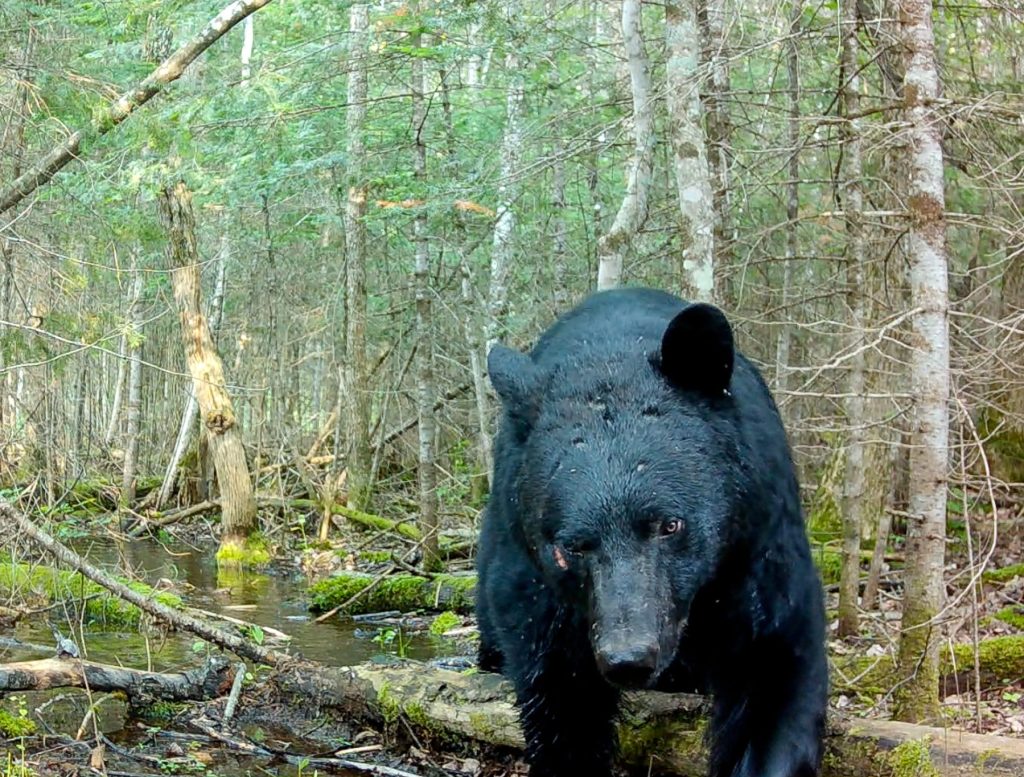
Black bears don’t have the easiest life near the BWCA. Photo courtesy of the Voyageur Wolf Project
In 2024, incidents reported to the Forest Service documenting human-bear encounters dropped to fewer than 10, the agency reports.
“Based on the documented success of its initial implementation in 2024 and 2025, continuing the order is the most effective and responsible path forward for protecting both visitors and the wilderness’s black bear population,” the Forest Service says.
Subscribe to Paddle and Portage to support journalism from and about the Boundary Waters.
Other Recent Articles
Chicago Man Recounts Experience Breaking Through Ice Near BWCA’s Stairway Portage
Ice hole on the Duncan narrows. Photo by George PastorinoDUNCAN LAKE – George Pastorino knew the sound. The ice was giving way underneath him and soon at least part of his body would be in the water. A casual snowshoe trek Wednesday, Feb. 4 in the Boundary Waters...
Canceled BWCA Permits Likely to Follow in Wake of Go Live Day
Outfitters are a key source for BWCA permit information. Photo by Joe FriedrichsA member of Congress from New Mexico said late last month in the nation’s capital that she wasn’t able to take a family vacation to the Boundary Waters Canoe Area Wilderness last summer...

Canadian Officials Seek Input For ‘Telephone Reporting Sites’ to Replace RABC Program
The RABC Program ends Sept. 14, 2026. P&P file photoBOUNDARY WATERS – Officials from the Canadian government are seeking input from various stakeholders on where telephone reporting sites should be located once the Remote Area Border Crossing Program ends later...