


Rep. Pete Stauber filed a joint resolution in the House of Representatives Jan. 12 that aims to repeal the Biden-era mineral withdrawal, which placed a 20-year moratorium on mining in a watershed neighboring the Boundary Waters Canoe Area Wilderness. Photo by Joe Friedrichs
Fate of Mining Ban Near BWCA Could Hinge on ‘Rule’ vs. ‘Order’ Distinction

By Joe Friedrichs
BOUNDARY WATERS – Don’t call it a procedural mishap. It’s an order. It’s not a rule.
These are the messages from conservation groups who say steps being taken by Congress this month to remove a 20-year mining ban on Superior National Forest near the Boundary Waters Canoe Area Wilderness don’t follow the law of the land.
The backstory is this: Rep. Pete Stauber, who represents the Boundary Waters region in Congress, filed a resolution this week that focuses on repealing a mineral withdrawal put in place during the Biden administration. That mineral withdrawal, more commonly referred to as a “mining ban,” put a 20-year moratorium on mining in the Rainy River watershed. This same watershed flows into the BWCA Wilderness near Ely.
“This dangerous and illegal mining ban was thrust upon my constituents and our way of life in Northern Minnesota and put our nation’s mineral security in jeopardy,” Stauber declared in a public statement.
This is Stauber’s third such attempt during the past year to undue the mining ban. His first attempt was stripped by the Senate parliamentarian last year. Legislation is likely being pushed by Twin Metals Minnesota’s parent company, Antofagasta, which is based in Chile. Twin Metals hopes to build a copper-nickel mine near the edge of the BWCA. The current mining ban makes that impossible to do currently. And while the Trump administration could act swiftly to rescind the mining ban, it’s likely Antofagasta is pushing Stauber and others to use legislation, rather than simple administrative action, as a tool to move the project forward.
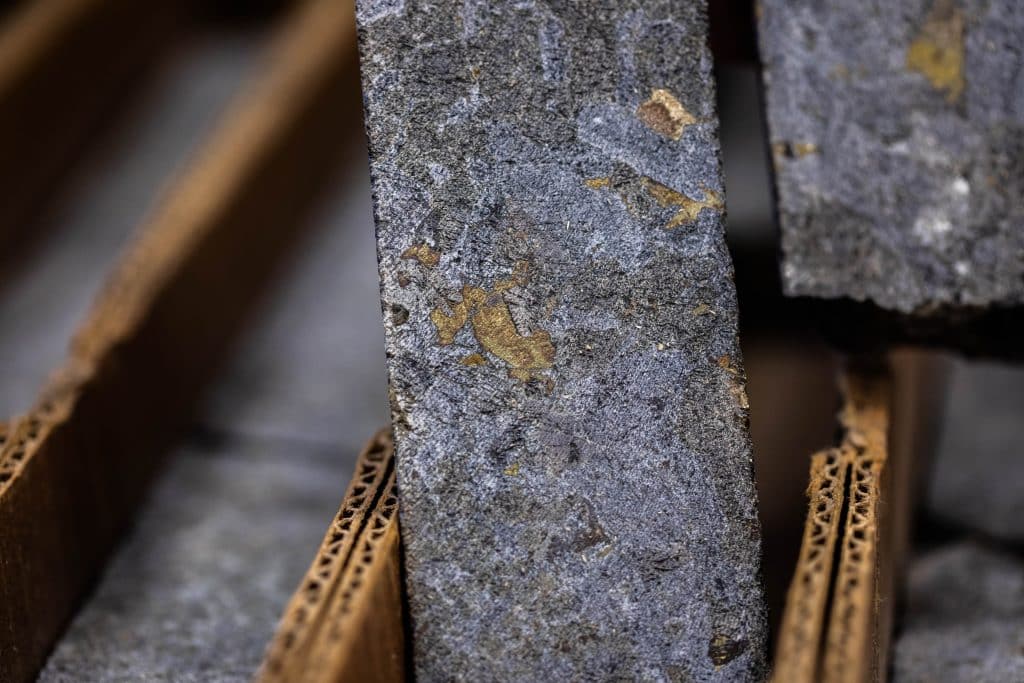
Core samples taken by Twin Metals near Birch Lake. Submitted photo
As Reuters and Paddle and Portage recently reported, the mining ban was filed in the Federal Register, which tracks actions by the executive branch, but not the Congressional Record, which tracks legislative moves.
Under a 1976 law known as the Federal Land Policy and Management Act, an interior secretary is required to notify Congress of public land orders that affect 5,000 acres or more, we reported Jan. 8. Becky Rom from the Save the Boundary Waters organization and lawyers familiar with this specific process for the Superior National Forest mineral withdrawal, including Robert Anderson, who served as solicitor of the Interior during the Biden administration, said this process was completed correctly.
“Section 204 of FLPMA authorizes these mineral withdrawals of up to 20 years if there’s a certain process that’s followed,” Anderson told Outdoor Life this week. “It’s a pretty straightforward process … and that’s exactly what we followed.”
Stauber, meanwhile, maintains that Biden did not file the notice in the Congressional Record and he should have, citing the mineral withdrawal in his resolution as a “rule,” not an “order.” Following Stauber’s claim, Trump’s Interior Department recently sent a letter and the mineral withdrawal with the expectation that it will be rejected by Congress, according to the Reuters and Paddle and Portage report.
And this is where conservationists, including Becky Rom from the Save the Boundary Waters Campaign, are calling foul.
In a text message sent Jan. 11 to this reporter, Rom wrote, “On your story, the legal technicality is wrong. I will let Ernie (Ernest Scheyder, the author of the Reuters article) know also.”
Rom says Stauber’s claims that the Interior Department made a mistake by not publishing a notice on the mineral withdrawal for land near the BWCA in the Congressional Record in 2023 don’t hold merit. Meanwhile, Stauber is claiming that the mineral withdrawal is actually a rule, and therefore it should have been published in the Congressional Register as well as the Federal Register.
“Any claim by Congressman Stauber of a violation of the Congressional Review Act is wrong,” Rom told Paddle and Portage Jan. 17.
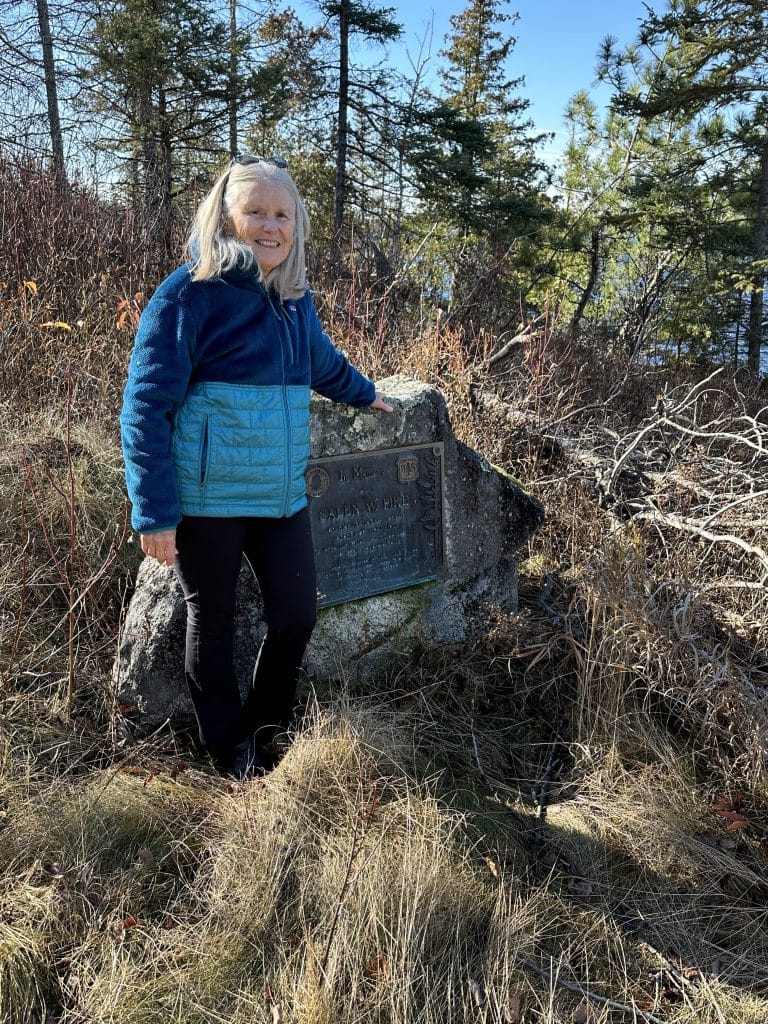
Becky Rom on the edge of the BWCA. P&P file photo
So, what is a rule and what is an order in the eyes of the federal government?
The Administrative Procedure Act (APA) defines a “rule” to mean “the whole or a part of an agency statement of general or particular applicability and future effect designed to implement, interpret, or prescribe law or policy or describing the organization, procedure, or practice requirements of an agency and includes the approval or prescription for the future of rates, wages, corporate or financial structures or reorganizations thereof, prices, facilities, appliances, services or allowances therefor or of valuations, costs, or accounting, or practices bearing on any of the foregoing.”
When it comes to an “order,” the APA defines these as “the whole or a part of a final disposition, whether affirmative, negative, injunctive, or declaratory in form, of an agency in a matter other than rulemaking but including licensing.”
Rom says under the Biden administration, the Interior Department delivered the appropriate notices to Congress, as required by law, on letters dated Jan. 26, 2023, when Public Land Order 7917 was signed.
“All members of the Minnesota congressional delegation received a letter of notice, including Congressman Stauber,” Rom said. “The decision was published in the Federal Register, as required.”
Rom and other advocates for the Boundary Waters claim there is no precedent for members of Congress to use the Congressional Review Act to overturn public land orders in the manner Stauber is currently attempting to do. However, the CRA was used just last year by Congress and the Trump administration to overturn Biden-era resource management plans, unlocking vast areas in Alaska for oil, gas, and mineral leasing, according to the House Committee on Natural Resources.
Rom maintains the key to the mineral withdrawal near the Boundary Waters is that it’s an “order,” not a “rule,” when it comes to language that determines who is right or wrong in this situation.
“By attempting to apply the Congressional Review Act to an Interior Public Land Order, the door is open to any agency order at any time for a CRA resolution,” Rom said. “This would create chaos within agencies if everything they do is subject to the Congressional Review Act.”
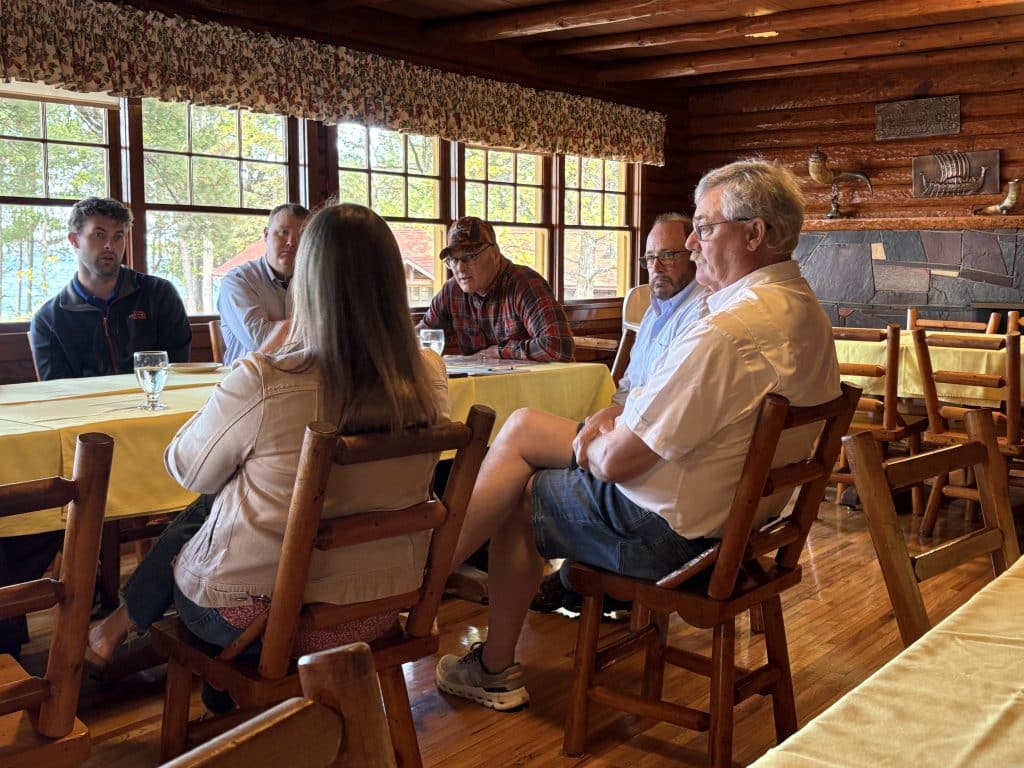
Congressman Pete Stauber (center with cap on) and District 3A Rep. Roger Skraba talk with BWCA business owners at Crane Lake in fall 2025. Photo by Joe Friedrichs
Looking ahead, the resolution Stauber introduced last week will need to pass the U.S. House of Representatives. A vote could take place in the House as soon as next week and is expected no later than the end of the month. The vote is expected to be close, according to numerous advocates and media outlets who are following the story.
Republicans control Congress at this time, but by a thin margin in both the House and Senate. Bipartisan support for Stauber’s resolution is lacking, including from members of Minnesota’s Congressional delegation. Democratic Rep. Betty McCollum called Stauber’s plan “a questionable scheme” that could negatively impact the Boundary Waters Canoe Area Wilderness.
“The Boundary Waters is a national treasure. As our country’s most visited wilderness area, the BWCA protects over one million acres of pristine forests and lakes with some of the cleanest fresh water in the world,” McCollum said. “The federal mineral withdrawal put in place under the Biden administration prevents toxic sulfide ore mining in the headwaters, and it was the result of years of comprehensive and scientifically-sound environmental analysis. The repeated efforts by the Trump administration and Congressman Stauber to overturn this withdrawal are anti-science and ignore the public input which overwhelmingly supported these protections.”
Subscribe to Paddle and Portage to support journalism from and about the Boundary Waters.
Other Recent Articles

Shug the Hammock Camper Diagnosed with Rare Form of Cancer
Shug (right) and M Baxley at the 2025 Winter Camping Symposium. Photo by Joe FriedrichsOur friend Shug found out this week he has a rare blood disease called chronic myeloid leukemia. Shug introduced the joys of hammock camping to people all over the world. His videos...

A Visit to Sigurd Olson’s Listening Point as Senate Nears Vote to Reverse Mining Ban
Photo from inside Sigurd Olson's house in Ely, now the headquarters for the Listening Point Foundation. Photo by Joe FriedrichsA bill that was introduced by a Minnesota Congressman to overturn a 20-year mining ban near the Boundary Waters is heading to the Senate...
Talking Boundary Waters Politics with Candidate for Minnesota Legislature
Joe Friedrichs (left) talks with Minnesota District 3A Candidate Aaron Kania during the Ely Winter Festival. P&P photoFresh off his retirement from the U.S. Forest Service, Aaron Kania announced in January 2026 his candidacy for the Minnesota House of...