
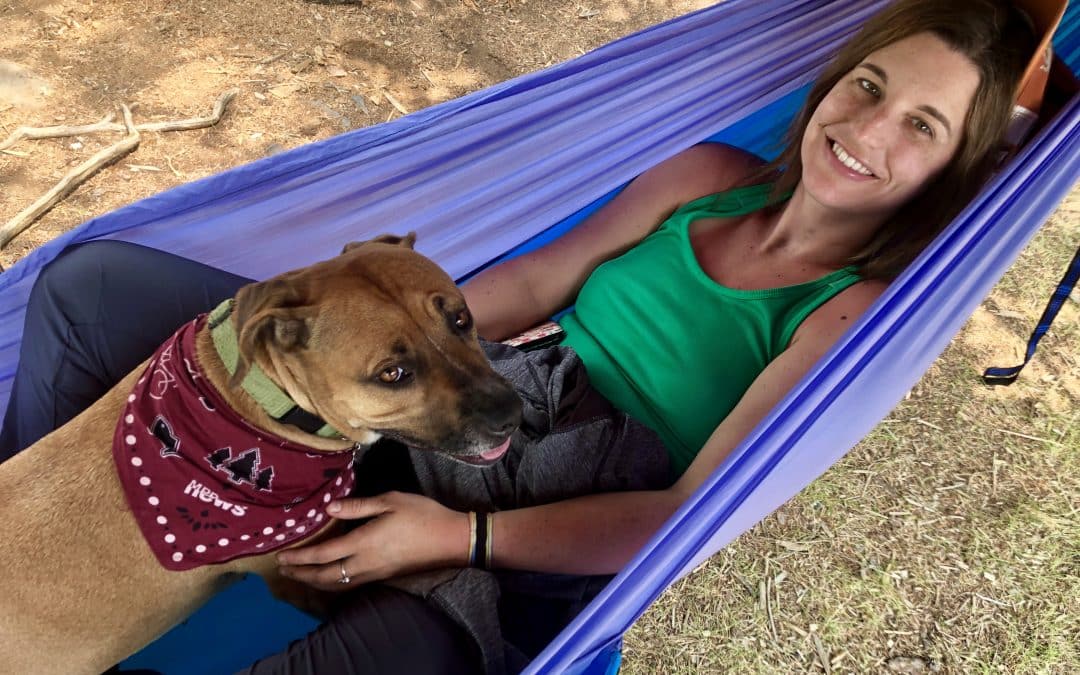
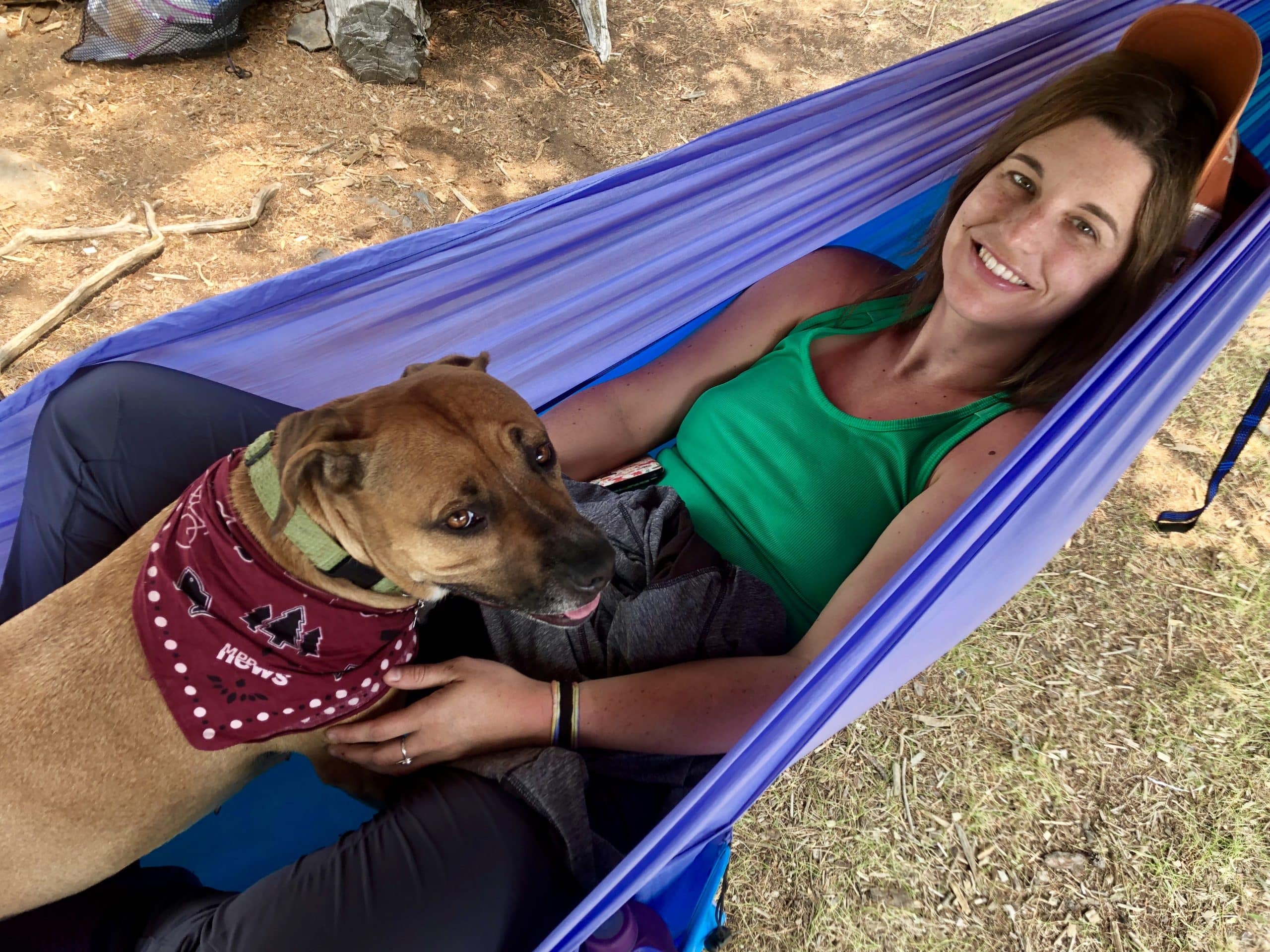
Anna and her dog, Cici, hanging out in the BWCA. Submitted photo
Dogs in the BWCA – Leash Law and Wildlife Encounters

By Joe Friedrichs
A moose sighting can be the highlight of many trips to the Boundary Waters Canoe Area Wilderness.
For paddlers or hikers who bring their dogs with them on a trip to the BWCA, a moose sighting can be a much more complex encounter.
Two Minnesotans, Anna and Brant, encountered a cow and calf moose on Ham Lake, located just outside the BWCA near the Gunflint Trail. It was a great sighting for the couple, who’ve always wanted to see a moose while traveling across the canoe country. Things changed, however, when their dog Cici also saw the moose.
In short, Cici saw the two moose near camp and ran after them. The situation was intense for all parties involved. Paddle and Portage media spoke with Anna and Brant about the experience. See the video below for the full podcast interview.
The U.S. Forest Service does have a policy regarding dogs in the BWCA Wilderness. Pet owners are supposed to keep their dogs on a leash, something Brant and Anna say they agree with. Indeed, there are many BWCA visitors who bring their dogs on a canoe, hiking, hunting, or winter adventure to the wilderness. According to the Forest Service, “Dogs can endanger wildlife and barking intrudes on the experience.”

BWCA dog policy. Image courtesy of U.S. Forest Service
Minnesota’s moose population is stable, but a far cry from its once robust population. In March 2026, state and Tribal researchers confirmed Minnesota’s moose population continues to hold steady at nearly 4,500 animals.
After peaking at around 8,800 moose in 2006, the estimated population of moose in Minnesota crashed to an estimated low of 2,800 in 2013.
But since then, Minnesota’s moose population has stabilized, state researchers suggest.
With regard to dogs in the Boundary Waters, the Forest Service says thee fine will be $50 if someone violates the leash law in the BWCA. They also note that it is the option of a wilderness ranger or law enforcement officer to issue a citation or use the situation as “educational.” This is similar to the sentiments shared in the rollout of the food storage order from 2024. This means it’s subjective determination by the officer or ranger as to if you will be fined and ticketed.
Meanwhile, the Forest Service says that every year visitors lose dogs within the BWCA due to a run-away or wildlife encounter. They ask the public to “please follow the law to protect your dog and wildlife.”
Subscribe to Paddle and Portage to support journalism from and about the Boundary Waters.
Other Recent Articles

Local Governments Keep Asking: How Much is the BWCA Wilderness Worth?
The Cook County Courthouse in Grand Marais. Photo by Joe Friedrichs Local governments near the Boundary Waters Canoe Area Wilderness have asked this question before, and they’re still wondering: How much money is the BWCA worth? The root of the question stems from...
Wildfire Evacuation Stands Out in Otherwise Quiet Year for BWCA Search & Rescue Operations
Towboat evacuation July 14 in the BWCA Wilderness. Photo courtesy of Vosburgh's Custom Cabins BOUNDARY WATERS – A stretch of three days in July where thousands of paddlers were evacuated from the Boundary Waters Canoe Area Wilderness was the peak of an otherwise quiet...

Forest Service Prepares for Significant Announcements on BWCA Policy & Usage
BWCA Wilderness entry point sign. Photo by Joe Friedrichs The U.S. Forest Service continues to consider changes to a trio of policies that would impact people and businesses that interact with the Boundary Waters Canoe Area Wilderness. Of the potential changes, this...