


Prescribed fire is a tool the Forest Service uses, primarily outside the BWCA Wilderness. Photo courtesy of Superior National Forest
Fernberg Project to Commence Without Prescribed Fire in the BWCA Wilderness

By Joe Friedrichs
ELY – Expanded hiking opportunities, logging, and prescribed fire are coming to a popular gateway to the Boundary Waters Canoe Area Wilderness, the U.S. Forest Service announced this week.
The Fernberg Road extends about 15 miles east from Ely, surrounded on three sides by the Boundary Waters Canoe Area Wilderness. The road corridor, which ranges from roughly 2½ miles to 4½ miles wide, is full of homes, cabins, resorts, and recreation sites. Something known as the “Fernberg Project” has been in the works for years, with the Forest Service announcing an action plan May 5.
All of the work that will occur in the plan will take place, at least initially, outside of the BWCA Wilderness. It remains possible the Forest Service could use the Fernberg Project to do work, including prescribed burns, inside the wilderness. The Forest Service announced this week the Fernberg Project will be implemented in stages, allowing the federal agency to reconsider if prescribed fire inside the BWCA Wilderness is necessary in the future.
Meanwhile, logging and other forms of timber management will occur as soon as this month outside the wilderness line, with activities focusing on improving forest diversity, enhancing forest health, and promoting wildlife habitats. The plan includes the construction of 10.5 miles of hiking trails for the North Country Trail system. Logging will also cover about 9,000 acres outside the wilderness.
“This decision increases the opportunity for lightning-caused fires to play a natural role within the BWCA by reducing heavy fuel loading in areas outside the wilderness boundary,” Tom Hall, the Superior National Forest supervisor wrote in his final decision, which he signed May 1. “However, this decision alone does not address the hazardous fuel inside the BWCA Wilderness. Prescribed burning inside the BWCA Wilderness in the future would provide more risk reduction and increase the opportunity for lightning caused fires to play a natural role in the BWCA Wilderness.”
Hall said a future decision would be needed regarding prescribed burning activities inside the BWCA wilderness. Fuel reduction treatments need to be completed outside the wilderness first to best position the Forest Service to conduct the prescribed burning inside the Wilderness more safely and effectively.
“Fuel reduction outside the wilderness is estimated to be completed in approximately 10 years,” Hall wrote. “The phased decision approach allows line officers and resource specialists an opportunity to reassess the need to conduct wilderness prescribed burning at such time it is timely for a decision.”
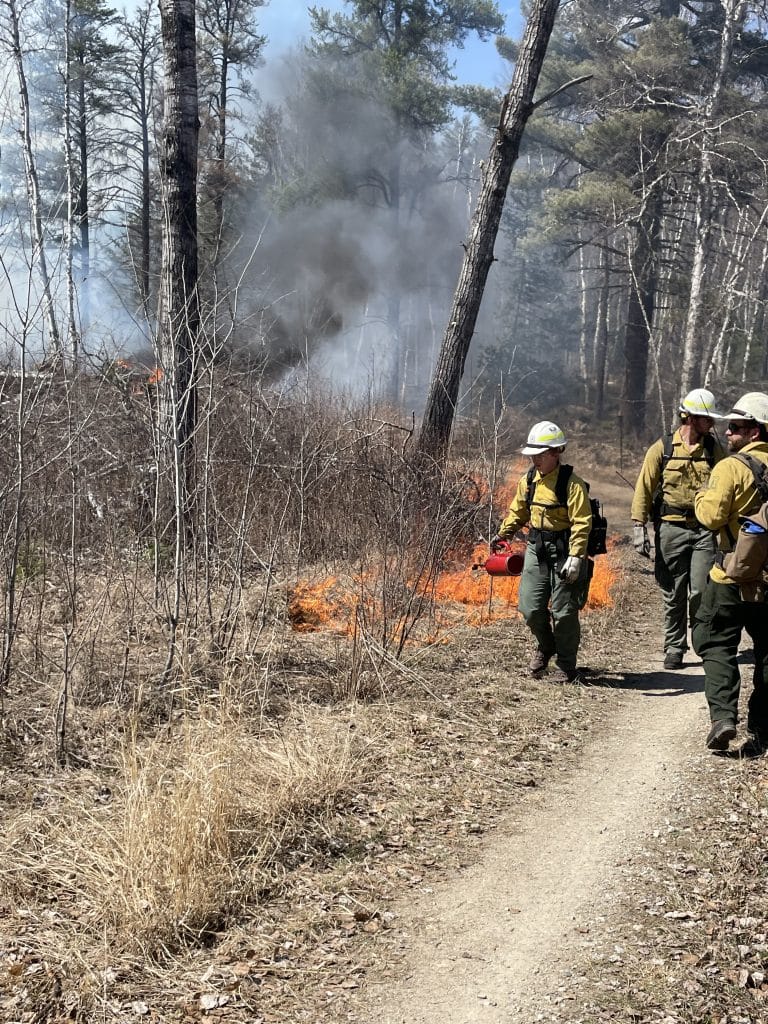
Firefighters walk a road lighting a wildlife opening prescribed fire on the Tofte Ranger District in 2024. Photo courtesy of Superior National Forest
The Fernberg Project has garnered mixed reactions from BWCA enthusiasts, private landowners, and others who live near Ely. The Forest Service maintains the plan could reduce the threat of fires to human lives and private property. Furthermore, the Fernberg Project could see tens of thousands of acres inside the Boundary Waters burned intentionally, logging on federal lands outside the wilderness, and numerous other activities across a broad swath of forest in the heart of canoe country.
Among the skeptics of the plan were the Sierra Club and Wilderness Watch. Both organizations voiced concern about the project in comments that were made public earlier last year. Among the concerns raised are potential violations of the Wilderness Act, destruction of critical lynx habitat, and burning old-growth forests.
“The Forest Service’s approval of 84,000 acres of activity to reengineer the natural landscape into reflecting the wildfire fuel conditions most desired by managers also undermines the goals of the Wilderness Act,” the group Wilderness Watch shared in its submitted comment.
As we’ve previously reported, the Fernberg Project brings together several recent issues, like the historic role of fire in what’s now the wilderness, lessons about managing wildfires and protecting people, human intervention in what is supposed to be untouched territory, and the future of fire and the southern boreal forest in a changing climate.
And while wildfires are viewed by some simply as destructive forces of nature, they played a significant role in shaping what today are considered the most stunning landscapes across the Boundary Waters. The reality is this is a place where wildfire is common—even necessary.
Historically, some of the most important fires the Boundary Waters landscape experienced were those started intentionally by the Indigenous people who have lived here for centuries and who used these fires as a tool of sorts. Other times the fires started naturally, from a lightning strike, for example. Across the 1854 Ceded Territory, a vast area of land in northeastern Minnesota that includes all of Superior National Forest and the BWCA Wilderness, Indigenous people have for generations engaged in the practice of intentionally lighting smaller, controlled fires with specific outcomes in mind, including acquiring food and materials for clothing, making canoes, and following other means of living with the land known as “cultural burning.”
Forest Service officials say it’s a matter of thinking on a different time scale. By conducting prescribed burns now, the agency might not have to intensively intervene in some future natural fires. Forest Service officials told Paddle and Portage last winter that there are several ways the agency is supposed to protect wilderness, including managing for a natural ecosystem.
The tactics include allowing short-term management, like prescribed burns, to allow for fewer interventions, like fighting natural fires, in the long term. The Forest Service also says the proposed fires are authorized by policy that allows for wilderness management activities to protect life and property.
“Our Forest Service policy that was interpreted from the 1964 Act doesn’t allow for ecological burning,” the Forest Service said. “But it does allow for burning for public safety and basically preventing risk to life and property.”
The Fernberg Project would not be the first prescribed burning in the Boundary Waters. Burning was conducted on about 50,000 acres inside the wilderness after the 1999 blowdown, and 1,300 acres of burning were authorized again in 2022 for the HiLo Project, primarily around Burntside and Slim lakes.
The Forest Service is often restricted by the timing of natural fires, climate and forest conditions, budget constraints, and concerns about fires getting out of control. Prescribed fires are usually conducted in the spring or fall, when cooler, wetter conditions make fire more manageable. But wildfires often hit the area during summer, when hot and dry conditions make it much more dangerous to allow fires to burn.
Subscribe to Paddle and Portage to support journalism from and about the Boundary Waters.
Other Recent Articles

Forest Service Enacts Campfire Ban in BWCA Wilderness Starting June 6
A campfire ban for the BWCA Wilderness goes into effect June 6. Photo by Erik Dickes Campfires in the Boundary Waters Canoe Area Wilderness will temporarily be banned starting Saturday, June 6. The campfire ban is currently scheduled to be in place until June 30....

No RABC Permit, No Problem: Telephone Reporting Sites Go Live in Quetico in June
Quetico entrance at Cache Bay. Photo by Joe Friedrichs Paddlers will be able to enter Quetico Provincial Park at the Prairie Portage and Cache Bay ranger stations using the new telephone reporting sites starting next month. Paddle & Portage media spoke to...

Helium Exploration Rolls Along Near the Boundary Waters
Looking for helium near the Boundary Waters. Photo courtesy of Pulsar Helium Deposits of helium found near the Boundary Waters remain a quiet talking point amongst industry insiders, state and federal regulators, politicians, and others interested in the future of how...