

RABC permit sign. P&P file photo
RABC Permits Extended Until the End of November

By Joe Friedrichs
BOUNDARY WATERS – The Remote Area Border Crossing Program has a new end date.
The RABC Program as it currently operates is now scheduled to close Nov. 30. The program was set to end in mid-September. No official reason for the program’s extension was immediately provided.
Paddle & Portage media reached out to CBSA officials Aug. 11 to ask if there are any lakes that have been designated yet for telephone reporting in correlation with the end of the RABC Program. We also asked if another extension of the RABC Program beyond Nov. 30 possible.
Kelly Cameron, a spokesperson for CBSA, replied Aug. 13, stating: “The Canada Border Services Agency (CBSA) has identified over 15 new telephone reporting sites and is currently in the process of formally designating them. When sites are officially designated, it will be announced on social media and on the CBSA Directory of Services. “
She added, “The CBSA has extended the Remote Area Border Crossing permits until Nov. 30, to align with the boating season. This decision ensures that current permit holders relying on remote border crossings for seasonal maritime activities can close out the season in a consistent manner.”
The permits under the program will eventually be replaced by telephone reporting to cross from Minnesota into Canada on border lakes such as Saganaga at the end of the Gunflint Trail. The new telephone reporting impacts border lakes from the Pigeon River at Lake Superior to Lake of the Woods.
Quetico Provincial Park in Ontario served as a rollout for the system to replace RABC permits. The telephone reporting option went live June 8 at Quetico’s Cache Bay and Prairie Portage ranger stations. Paddlers looking to enter Quetico via these two remote ranger stations can now do so without a Remote Area Border Crossing permit, which were previously required to enter at these stations. The RABC Program was suspended in fall 2024, causing confusion and a barrage of other emotions for people who utilized RABC permits to cross the border lakes between Minnesota and Ontario. RABC permits were used by paddlers and others from Lake Superior near Grand Portage to Rainy Lake near International Falls.
The telephone reporting sites are only active at the Quetico ranger stations at this point. More sites will be coming before mid-September, CBSA officials continue to tell Paddle & Portage media. In an update shared with us July 23, Luke Reimer, a spokesperson for CBSA, said an additional reporting site on Saganaga Lake is being considered. Paddle & Portage confirmed with local spokespeople on the massive lake at the end of the Gunflint Trail that telephone reporting will be in place this fall, and will be available this winter.
Reimer said that across the border lakes, 15 new telephone reporting sites are expected to be rolled out before ice forms on the lakes.
Meanwhile, people who travel between Minnesota and Ontario with any degree of frequency can enroll in the NEXUS Program. In a statement sent to Paddle & Portage media, CBSA officials said “NEXUS members may call 30 minutes to 4 hours in advance of their arrival.”
NEXUS is designed to speed up border crossings into Canada and the United States for “low-risk, pre-approved travelers,” according to CBSA officials. It is jointly run by the CBSA and U.S. Customs and Border Protection. NEXUS memberships are valid for five years. There is a $120 non-refundable application processing fee.
For people who don’t plan to cross the border lakes with any degree of frequency, or only when they want to take a trip to Quetico via the park’s southern entrances, the telephone reporting sites are efficient and extremely easy to use. Someone entering Cache Bay, for example, simply stops at the ranger station, uses a cell phone that is provided on site, and checks in with Canadian customs by providing their passport number, canoe registration number, and basic information about what they plan to do in Canada. For people entering Quetico, paddling, camping, and fishing will be a commonplace and acceptable response, according to people who have utilized the program, as heard on a recent episode of the Paddle and Portage Podcast.
When the Cache Bay and Prairie Portage ranger stations are not open for the season, including in early May, after mid-September, and all of the winter, paddlers will need to use a different telephone reporting site to enter the park. The details on where the additional sites will be located, including on Saganaga Lake or near the Basswood/Sucker lakes area, remain unknown at this time, though that scope is narrowing and more information on the site specifics is expected in the coming weeks. As referenced previously, people enrolled in NEXUS would have a more streamlined means to enter Canada on the border lakes, including during the shoulder seasons and winter.
Other Recent Articles
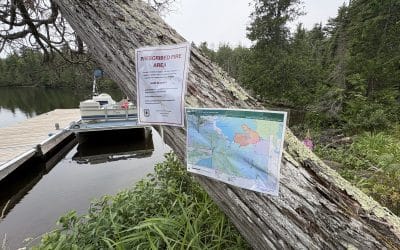
Cabin Owners, Forest Service Split on Benefits and Timing of Prescribed Fire Near the BWCA
A sign posted by the Forest Service at the Greenwood Lake public landing showing a map of prescribed fire activity in 2026. Photo by Joe Friedrichs The first wildfire of the year near the Boundary Waters started May 15 near Betty’s Pies and Highway 61, not far from...
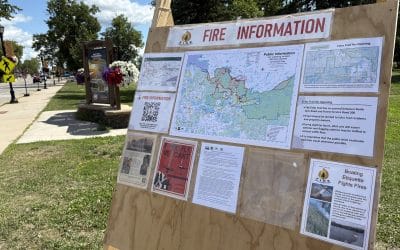
Nearly 75 Percent of BWCA Wilderness Campsites to be Reopened by August 13
A BWCA update kiosk as seen Aug. 10 in Ely's Whiteside Park. Photo by Joe Friedrichs The U.S. Forest Service and its partners continue to make progress containing a series of wildfires that led to the complete closure of the Boundary Waters Canoe Area Wilderness in...

Scope Narrows For Telephone Reporting Sites Across the Boundary Waters Region
The border lakes of the Boundary Waters. P&P photo BOUNDARY WATERS – The end of the Remote Area Border Crossing Program and permits that allow people to cross many of Minnesota’s border lakes is approaching. The RABC Program as it currently operates will close...