

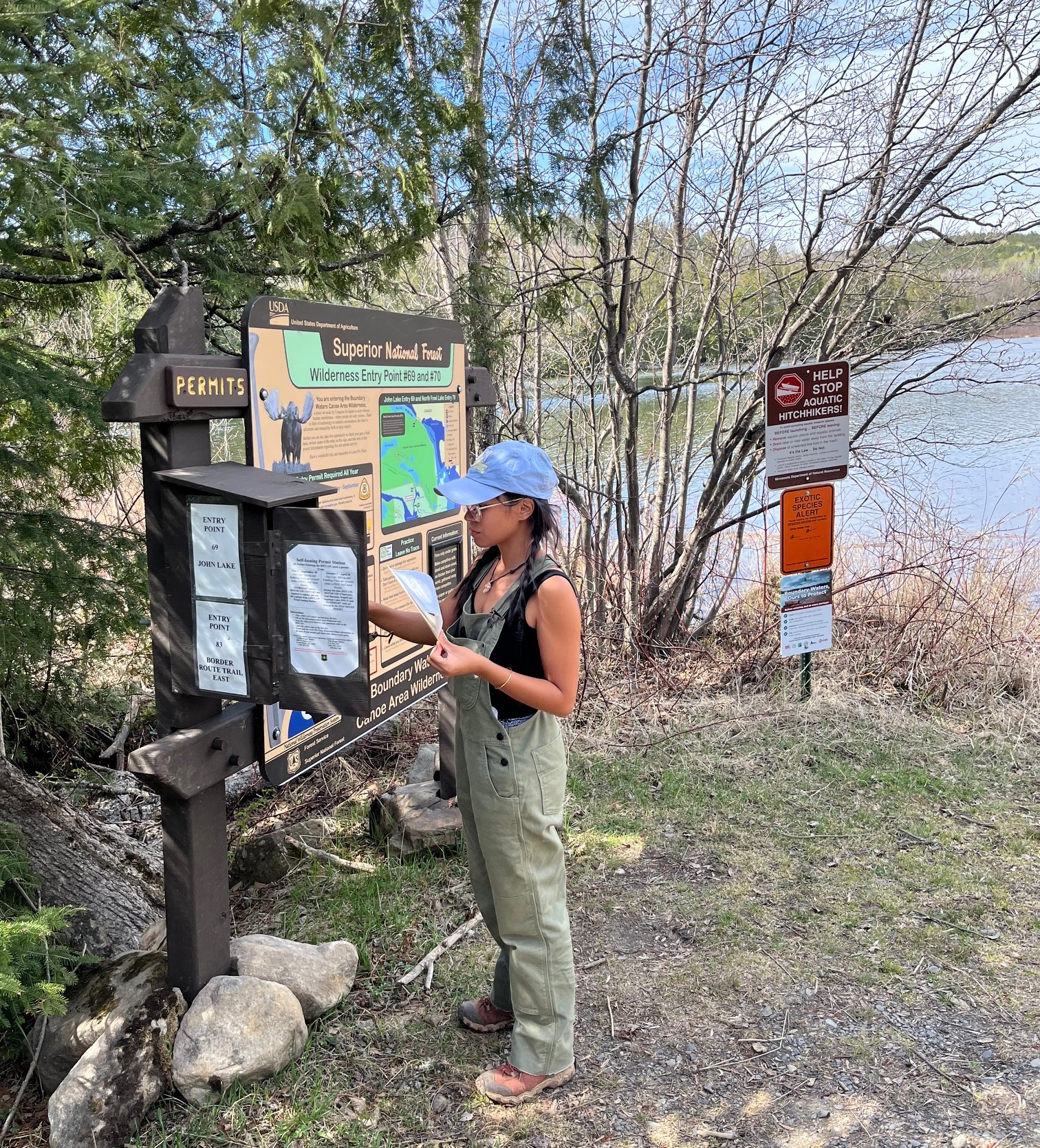
The Boundary Waters Canoe Area is the most visited wilderness area in the nation. Photo by Joe Friedrichs
Recognizing the Wilderness Act’s Role in Protecting Paddling Destinations 60 Years Later

By Joe Friedrichs
MINNESOTA – It’s not just here. It’s beyond the Boundary Waters Canoe Area Wilderness.
“If future generations are to remember us with gratitude rather than contempt, we must leave them a glimpse of the world as it was in the beginning, not just after we got through with it,” said President Lyndon B. Johnson as he signed The Wilderness Act.
That signing took place Sept. 3, 1964.
Sixty years later, we can look to places like the BWCA and other wilderness areas across the country and observe some of the finest paddling destinations are indeed protected by this landmark conservation bill. The South Fork of the Flathead in Montana’s Bob Marshall Wilderness. The Salmon in the Frank Church River of No Return Wilderness. Closer to Minnesota, there’s the Sylvania Wilderness in Michigan. The list goes on.
The Wilderness Act created what’s known as “the National Wilderness Preservation System.” The bill placed more than 50 areas into the “system.” The BWCA was among those in the initial placement. These days, the National Wilderness Preservation System is a network of over 111 million acres – more area than the state of California – of public land comprised of more than 800 wilderness areas administered for the American people by the federal government, according to the U.S. Forest Service. As of this month, there are wilderness areas in 44 states.
A list of Minnesotans were involved in shaping and eventually drafting the landmark policy. Among them are Ernest Oberholtzer, Sigurd Olson, Hubert Humphrey, and Orville Freeman. These towering figures in conservation helped protect areas like the BWCA and other paddling destinations across the country.
That said, wilderness designations and the concept of keeping public land set aside from development, mining, logging, and other types of extraction are not without critics. Non-motorized use agitates some user groups. Tribal nations will speak of restricted “access” for band members in terms of usufructuary rights. Indeed, wilderness and the notion of “protection” for some means limitations to others.
Paddle and Portage will be featuring more on the Wilderness Act of 1964 in the September issue of the magazine.
Support this type of reporting from and about the Boundary Waters and beyond by subscribing to Paddle and Portage today.
Other Recent Articles
The Politics of the Boundary Waters Rolls Into September with Candidate Forums in Ely
Aaron Kania, left, and Ely Mayor Heidi Omerza (center) talk about the Boundary Waters with a group at the college in Ely. Photo by Joe Friedrichs Mining near the Boundary Waters will be in the political spotlight this month as a pair of political forums take place in...

Wabakimi Origins Rooted in the Benefits of Fire, Then the Lodge Burned
The site of the main lodge at Wabakimi Outfitters after a wildfire burned it to the ground in July. Submitted photo WABAKIMI PARK – Bruce Hyer says Smokey the Bear was a liar. Considered by some – or at least by his own standards – to be the “Father of Wabakimi,” Hyer...

Walz’s Executive Order to Protect the BWCA Only the Latest Move in the Wilderness Chess Match
BWCA Wilderness sign at Seagull Lake. Photo by Joe Friedrichs A Paddle & Portage subscriber who lives out of state reached out late in the day Aug. 18 after seeing social media light up with news of Minnesota’s governor “saving the Boundary Waters.” In her...