

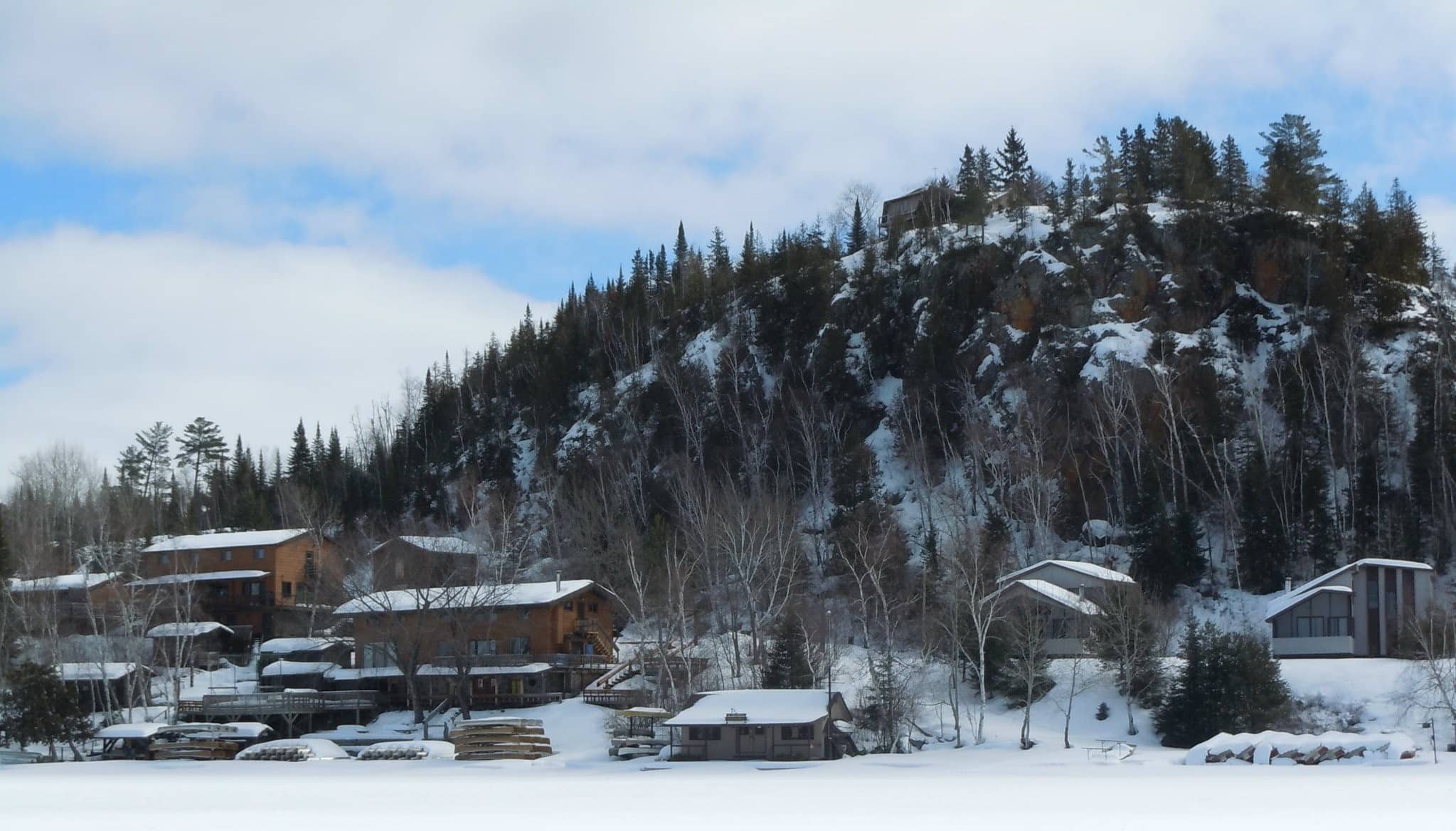
Williams and Hall Outfitters is located on the shore of Moose Lake, about 20 miles north of Ely. Photo courtesy of Williams and Hall
Outfitter Near Ely Listed for Sale Faces Uncertainties with RABC and Towboat Issues Unresolved

By Joe Friedrichs
MOOSE LAKE – This is the towboat capital of the Boundary Waters.
On this lake, more than 2,300 tows ushered people to the starting line of their canoe trip in the Boundary Waters Canoe Area Wilderness in 2020. The year before, more than 3,000 tows motored across Moose Lake. The U.S. Forest Service is currently reviewing the usage of towboats that are legally permitted to help people travel into the BWCA Wilderness. And the outcome of this review could impact the sale of at least one major outfitter near Ely.
Williams and Hall Outfitters is located on the shore of Moose Lake, approximately 20 miles north of Ely on the Fernberg Trail. The business is currently for sale with a listing price of approximately $3.87 million. Williams and Hall is a significant player in the outfitting industry on this side of the wilderness, bringing an abundance of scout troops, families, anglers, and other paddlers to the edge of, or into, the most visited wilderness in the nation.
“Williams and Hall has provided our family with a unique, exciting, and fulfilling life among the pines,” said Blayne Hall, a co-owner of the business. “We are at the top of our game at the top of the industry.”
Hall and his wife, Charlene, have owned and operated the canoe outfitting business for more than 30 years. They put it up for sale in 2022. Since that time, two factors – both rooted in government policy – have revealed themselves and could play a role in the sale price of the business.
The first factor is the aforementioned towboat issue; the other is a temporary pause on the Remote Area Border Crossing (RABC) program. Paddle and Portage spoke with Blayne Hall Dec. 28 about both of these topics as they related to his business, and the possible sale of Williams and Hall.
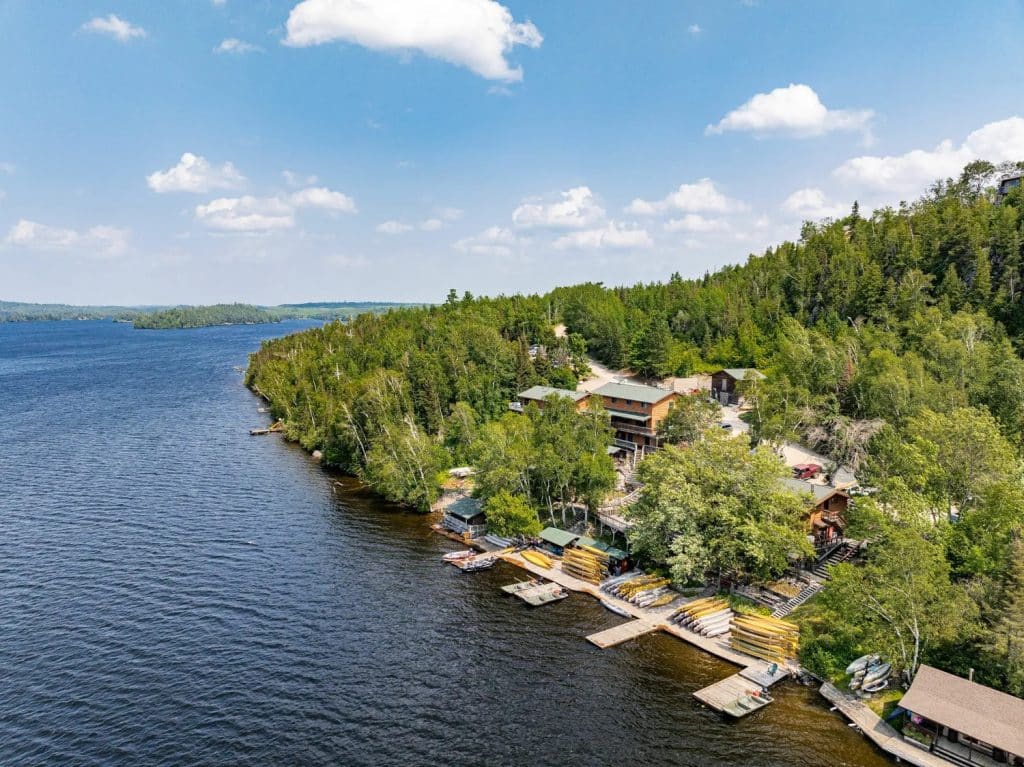
Williams and Hall. Submitted image
Towboats
Motorized boats and commercial tows inside the wilderness line are a significant issue as the Forest Service revisits the plan it uses to manage the BWCA Wilderness. In 2023, a court ruling denied a request from the environmental group Wilderness Watch to immediately stop motorized towboat usage in the BWCA.
The June 2023 ruling came about two months after the news of a court case that put in jeopardy the longstanding practice of using motorized towboats to help Boundary Waters visitors get started on their wilderness trips. The idea behind tows, in part, is that the Forest Service allows the use of towboats to assist canoeists starting their journey, dispersing visitors deeper into the million-acre BWCA Wilderness. It also helps eventual paddlers travel faster across Moose Lake where Williams and Hall is located, and other lakes including Newfound and Sucker as they approach the Prairie Portage Ranger Station into Quetico. Some outfitters at the end of the Gunflint also use the towboat service on Saganaga Lake to help paddlers reach Quetico Provincial Park via the Cache Bay Ranger Station.
On the west side of the wilderness, shutting down tows or reducing the tow capacity would impact Williams and Hall, LaTourell’s, and Spirit of the Wilderness, among others. On the eastern side of the wilderness, altering how many or shutting down commercial tows would impact Tuscarora Lodge and Outfitters, Seagull Outfitters, and Voyageur Canoe Outfitters most prominently. The ruling would have a much larger impact on the Ely area, where many canoeists receive a tow across Moose Lake each season, as well as other lakes in the Ely area.
In 2023, Judge Nancy Brasel said that halting the tow services would impact the ability for “older visitors and visitors with limited mobility” to experience the BWCA.
Brasel ruled on the request for an immediate injunction on tow services for the 2023 paddling season. Environmental advocates said last year they are still hoping the Forest Service will significantly scale back the tow systems that currently operate in select areas of the BWCA Wilderness, including areas at the end of the Gunflint Trail.
Wilderness Watch, one of the groups at the forefront of the charge to change motorized use in the BWCA Wilderness, claims that the Forest Service is not upholding its self-imposed restrictions and limitations of towboat services. The Forest Service’s most recent figures showed that in 2019 there were 4,164 tows made in the BWCA Wilderness. The year prior there were 4,011 tows. These figures amount to nearly “tripling the level that the Forest Service pledged that it would limit the total to,” according to officials from Wilderness Watch.
Changes to the agency’s forest plan directive can better position the Forest Service to restore and preserve wilderness character and meet the purposes of wilderness described in the 1964 Wilderness Act and subsequent BWCA Wilderness Act from 1978, according to Tom Hall, the forest supervisor for Superior National Forest. The management direction for the BWCA Wilderness was last updated in 1993, Hall said last spring.
“Our implementation and monitoring over the past 30 years, and changes to national wilderness management policy and guidance, have highlighted several issues affecting wilderness character in the BWCAW and the wilderness experience for visitors,” Tom Hall said.
Blayne Hall (no relation to Tom from the Forest Service) told Paddle and Portage that reducing the towboat quota, or eliminating it altogether, would have a signifcant impact on the sale price of his business. He said the Forest Service has been responsive to his requests for information to some extent, though he wishes there was a specific point of contact within the agency to address some of his concerns about the towboat review. Blayne Hall said he was informed by the Forest Service that a final ruling on the towboat issue – which could include keeping the quota the same, increasing the number of tows allowed (very unlikely), reducing the quota, or eliminating the tows – should occur in 2026 or 2027. Until then, any potential buyer of the Williams and Hall is left hoping that the outcome and decision from the Forest Service would be favorable to the outfitters.
“As some of the people who’ve been coming up here to fish and camp age, the tows are really becoming an important part of someone’s experience,” Blayne Hall said Dec. 28.

Photo courtesy of Williams and Hall.
RABC Permits
As we’ve been reporting at Paddle and Portage for several months, there’s ongoing concern from business owners and others regarding the future of the RABC program.
After a barrage of questioning from members of the press, Congressional staff, business owners, and people who are feeling left hanging, Canadian officials are still being vague when it comes to the future of the RABC program.
“While RABC permit applications can still be submitted, as of Sept. 25, the Canada Border Services Agency (CBSA) has paused the processing of new and renewal applications as we work on reviewing and updating our procedures,” said Luke Reimer, a spokesperson for CBSA.
Reimer confirmed with Paddle and Portage Dec. 10 that the Canadian border agency “regularly assesses its programs to respond to current service needs and evolving trends.”
Part of assessing the current status of RABC permits includes dynamics focused on “ensuring the safety, security, and prosperity of Canada.”
With nothing in the way of a public announcement, the Canadian government in late September “paused the processing of new and renewal applications” for the RABC program that allows travelers to cross into certain remote parts of the Boundary Waters region.
Blayne Hall told Paddle and Portage that approximately 30 percent of his guests need and use an RABC because they are entering Quetico, the majority of them through Prairie Portage.
“It would be devastating if (RABC permits) go away,” Blayne Hall said.
The RABC permits allow U.S. citizens to cross into Canada on some border lakes, from Lake Superior over to Rainy Lake, without stopping at a customs checkpoint such as the Pigeon River entry point in Grand Portage. These permits cost about $35 to process and must be renewed annually. Canadian officials issued approximately 9,000 RABC permits in fiscal year 2023-2024. As of Dec. 10, they’ve issued approximately 7,300 permits in fiscal year 2024-2025, according to Reimer.
Blayne Hall said he first learned of the “pause” on RABC permits when this reporter called him Dec. 28. If the permits continue to be on pause or the program is shut down, it “would not help” in terms of the sale price of Williams and Hall, he said.
“It seems like there could be political underpinnings to the RABC pause,” Blayne Hall said of the temporary pause on the permits.
At this time, active RABC permits are valid until they expire, according to Canadian officials, though they won’t be renewed if the “pause” of the program continues. Permits are valid for one year from the time they were issued. All previously issued RABC permits that have expired will still be considered for renewal, and U.S. citizens can still apply for a new permit at this time, according to CBSA officials. That said, any renewal or new applications are likely, at best, to be sitting in a queue or holding phase until the “pause” of the program ends or some other factor intervenes.
Paddle and Portage asked CBSA officials in November if changes made in 2023 by Canada and the U.S. regarding the Safe Third Country Agreement (STCA) were a factor in the current RABC pause. Reimer said the agreement is not a factor in the current pause on RABC permits. In short, the STCA makes it difficult for people of any nationality entering Canada from the U.S. to claim asylum if they cross the border. The update from last year expands the STCA’s terms to cover the entire land border rather than just formal crossings. There’s been speculation by some Canadian officials following the U.S. elections earlier this month that Canada is preparing for a rise in border crossings with the threat of mass deportations under President-elect Donald Trump. When asked specifically if the third country agreement is impacting RABC permits, Reimer said, “No. As mentioned, the CBSA regularly assesses its programs to respond to current service needs and evolving trends, while ensuring the safety, security, and prosperity of Canada.”
Another program used to allow people to cross the U.S. – Canada border in a more streamlined fashion, known as NEXUS, is not currently being reviewed, while the RABC program is, Reimer said.
Additionally, U.S. officials Paddle and Portage spoke with for this story have not attributed the pause on RABC permits to anything related to background checks for people entering Canada.
This is the second time in recent years that RABC permits have been either suspended or paused. During the COVID-19 pandemic, all travel between the U.S. and Canada was suspended, with the RABC permits being suspended until 2022. Recently re-elected Minnesota Congressman Pete Stauber sent a letter to Canadian Prime Minister Justin Trudeau requesting that RABCs be available in 2022, telling this reporter at that time, “Minnesota and Canada both benefit from a healthy, reciprocal border crossing relationship,” Stauber said. “Especially during the summer months, our shared border area is a hub of economic vitality as tourists from around the world look forward to visiting our shared wilderness and lake areas.”
Paddle and Portage reached out to officials from Stauber’s office for comment on the current pause of RABC permits. Representatives from Stauber’s office told Paddle and Portage Dec. 10 that Stauber’s office submitted a letter to Canadian officials regarding the RABC program.
“Congressman Stauber recently sent the attached letter to the Canadian government,” Nicky Hazelbaker, a staff person from Stauber’s office told Paddle and Portage. “Since then, we have received communications from the Canadian Embassy regarding the letter’s delivery. However, we have not received an official response from the Canadian government.”
The RABC system has been in place for decades and has been effective in facilitating border crossings for individuals who live in remote areas and are unable to check in at an official point of entry, Stauber said previously. It is also utilized by paddlers who enter Quetico Provincial Park through Cache Bay from the end of the Gunflint Trail, and from Prairie Portage closer to Ely.
Paddle and Portage contacted Quetico Superintendent Trevor Gibb to ask if the Cache Bay Ranger Station would be open in 2025 if the RABC program remains paused or is officially suspended. In an emailed statement, Gibb said he was still unaware of the reasons behind the pause on RABC permits.
“I’ll let you know if I learn anything new so we can get the word out to Quetico park paddlers,” Gibb told Paddle and Portage.
The Past and the Future
Blayne Hall said there’s been serious interest from potential buyers of Willams and Hall since the business was first publicly announced as being for sale in 2022. Expected lower interest rates in 2025 should only generate more interest from potential buyers, Hall acknowledged. Despite the challenges and uncertainty of the future of towboats and the RABC Program, Hall is optimistic that the business will sell for a fair price.
“People are interested,” he said of potential buyers.
Paddle and Portage spoke with Hall three days after Christmas as he was driving from Idaho back to Minnesota. He said the canoe country has provided him with a lifetime of memories, though the need to step away is becoming apparent. In his bio on the business’s website, Hall mentions grandkids and palm trees, two considerations with strong appeal for someone who’s made a living on the edge of the Boundary Waters, he said.
“We feel extremely blessed to have been able to live and work here all these years,” Hall said, “but the time to make a change is here.”
Subscribe to Paddle and Portage to support this type of journalism from and about the Boundary Waters.
Other Recent Articles

Forest Service Enacts Campfire Ban in BWCA Wilderness Starting June 6
A campfire ban for the BWCA Wilderness goes into effect June 6. Photo by Erik Dickes Campfires in the Boundary Waters Canoe Area Wilderness will temporarily be banned starting Saturday, June 6. The campfire ban is currently scheduled to be in place until June 30....

No RABC Permit, No Problem: Telephone Reporting Sites Go Live in Quetico in June
Quetico entrance at Cache Bay. Photo by Joe Friedrichs Paddlers will be able to enter Quetico Provincial Park at the Prairie Portage and Cache Bay ranger stations using the new telephone reporting sites starting next month. Paddle & Portage media spoke to...

Helium Exploration Rolls Along Near the Boundary Waters
Looking for helium near the Boundary Waters. Photo courtesy of Pulsar Helium Deposits of helium found near the Boundary Waters remain a quiet talking point amongst industry insiders, state and federal regulators, politicians, and others interested in the future of how...