


A helicopter flies above Saganaga Lake in March (2025). Paddle and Portage photo
Canada Increases Border Patrols Above the Boundary Waters Region

By Joe Friedrichs
SAGANAGA LAKE – Not long after two gray wolves crossed Cache Point, the chopper appeared.
This was the scene on a recent morning in this remote corner of the globe, an area rarely visited by humans during the winter months. However, Canadian border officials are expanding their presence over places like Quetico and La Verendrye provincial parks just ahead of the 2025 paddling season.
Canadian helicopters and drones are flying over the lakes of the Boundary Waters with greater frequency than ever previously observed in history, according to multiple property owners on this massive lake at the end of the Gunflint Trail.
From Lake Superior to the far western edge of the Boundary Waters near Ely, reports of sightings of drones and helicopters flying just above the tree line continue to reach the Paddle and Portage news desk. The sightings include multiple reports from the past several days as March winds down. The helicopters, which are yellow with some white, are likely from Wisk Air in Thunder Bay and are staffed by a crew from the Canada Border Services Agency or other Canadian law enforcement officials.

Helicopter over Cache Bay from March 2025. P&P photo
There is speculation on some online forums specific to the Boundary Waters region that the drones and helicopters are from U.S. border security. However, the helicopters flying over Saganaga and other border lakes are indeed from Canada. In late 2024, Canada announced a billion-dollar strategy to fund and improve border security. A section of the plan is manifesting in real time over the Boundary Waters, with increased aerial surveillance topping the list in terms of visible differences in policy.
Donny Sorlie is the co-owner of Chippewa Inn on the Canadian side of Saganaga. He’s been coming to Sag during the winter for about 30 years and said he’s never seen this much traffic in the air from Canadian border security.
“It has 100 percent gone up,” he said.
Sorlie said he sees a Canadian helicopter about three times per week flying the border lakes and forests of the Boundary Waters, including over Saganaga, a popular lake for ice anglers during the winter.
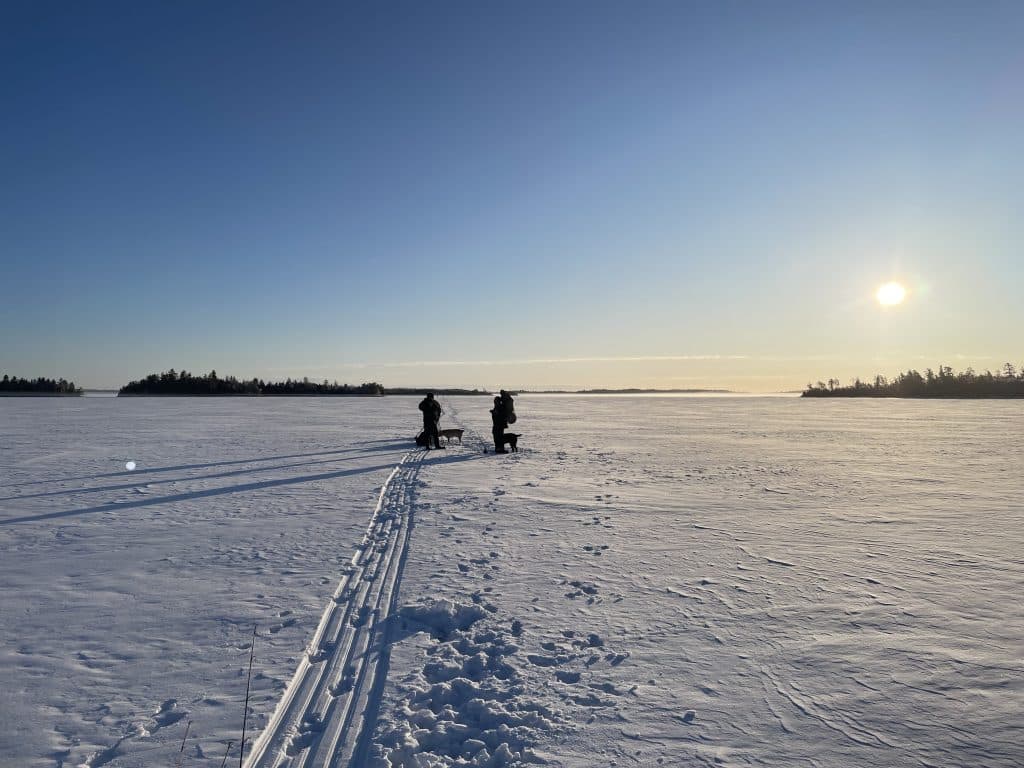
Cache Bay in Quetico on March 26. P&P photo
Snowmobile and angler traffic has been down this winter on the Canadian side of many of the border lakes across the Boundary Waters, including Saganaga. This could be a result of confusion over the Remote Area Border Crossing Permit program, and the fact new RABC permits are not being issued at this time. Only carryover permits from last year and late 2023 remain in effect at this time. The RABC permit allows U.S. citizens to cross over land, water, or ice from an area stretching from Lake Superior to Lake of the Woods without passing through a customs checkpoint. The future of the RABC program remains in question, though active permits from last year and late 2023 remain valid through Dec. 31.

Sag landing. Photo by Joe Friedrichs
Meanwhile, illegal border crossings do occur in Minnesota, but they are rare. Of those limited cases, most of them occur in the western part of the state. In terms of the Canada-U.S. border, which stretches for 5,525 miles, most illegal border crossings occur with people entering New York, Vermont, and New Hampshire from Canada.
Other Recent Articles

What Forest Service Headquarters Moving to Utah Means for the Boundary Waters
Information kiosk near the Tofte Ranger Station. April 2026 photo by Joe Friedrichs The federal government announced this week it is moving the headquarters for the U.S. Forest Service from Washington, D.C. to Salt Lake City. As part of the move, the Forest Service...

Forest Service Uses Dog Sled Teams in First Steps to Improve Monument Portage
Monument Portage in summer 2025. Photo by Mark Zimmer (the Barefoot Paddler) It became known as the portage where boots and socks vanish for parts unknown. The Monument Portage. Straddling the U.S.-Canada border, this well-traveled portage between Ottertrack and Swamp...

The Political Theater of the Boundary Waters
A land of legislation (and wilderness?). Photo by Joe Friedrichs ST. PAUL – State Senator Grant Hauschild went fishing for the votes of some Boundary Waters enthusiasts this month. Most regional media took the bait. In a move that some media outlets say will “protect...