

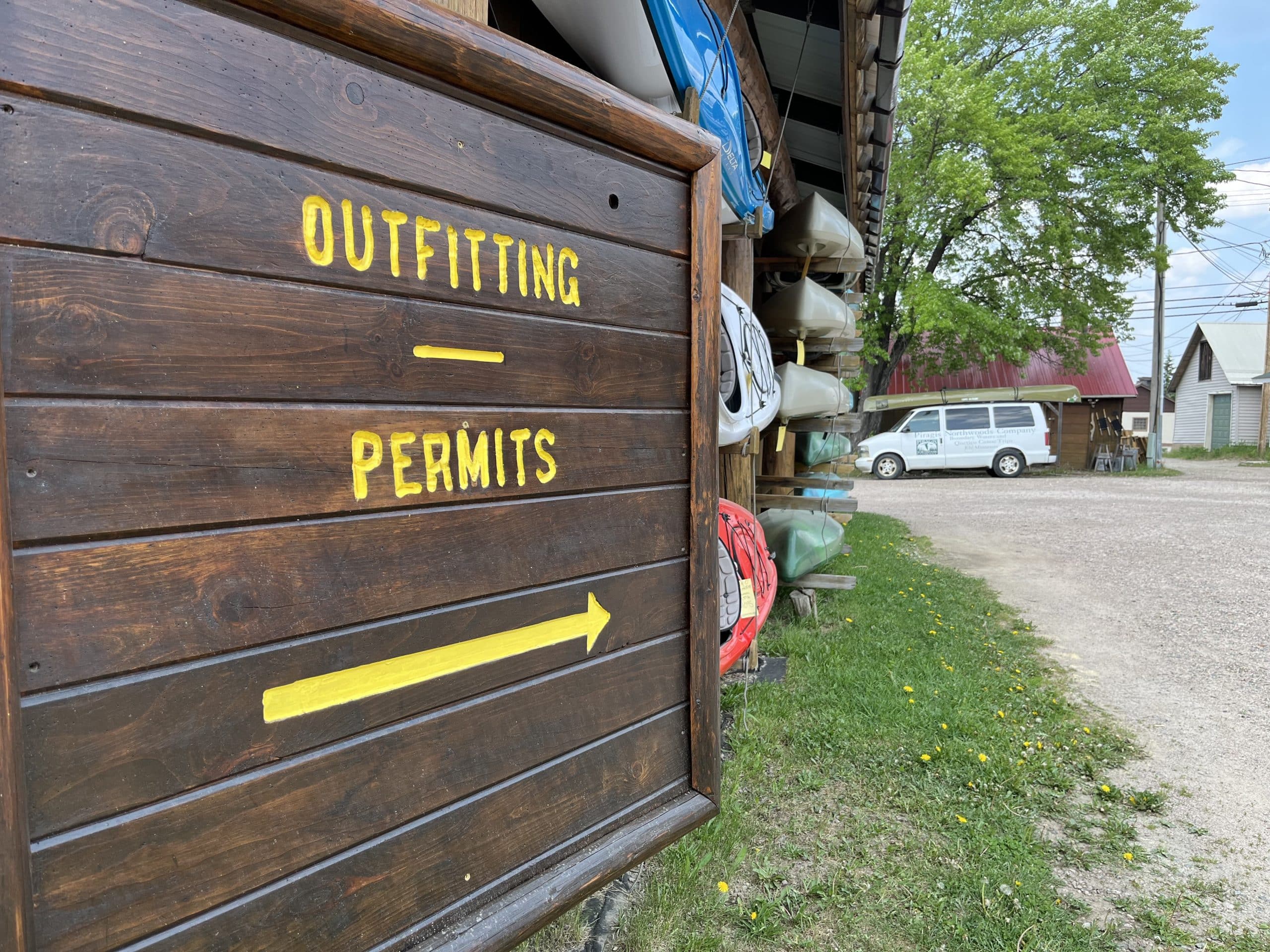
Photo by Joe Friedrichs
Record Number of Canceled Permits Once Again Highlights Annual BWCA Visitor Report

By Joe Friedrichs
Once again, more people canceled a permit to the Boundary Waters Canoe Area Wilderness last year than ever before, according to a new report from the U.S. Forest Service.
Cancellations of BWCA Wilderness permits reached an all-time high of 11,244, the Forest Service announced in the report, which includes data from 2024 and the past five years of BWCA Wilderness visitation.
The Forest Service says cancellations have more than doubled in five years, suggesting that BWCA Wilderness visitors continue to reserve more permits than they can use, according to the federal agency.
The previous high for cancellations was set in 2023 and announced last year. That figure was 10,245, meaning nearly 1,000 more permits were canceled last year than the previous record high.
As we’ve previously reported, some outfitters and paddlers say the process the Forest Service uses for people to book permits is to blame, at least in part, for the high number of cancellations.
The quota permit season runs from May 1 to Sept. 30. The permits are required for overnight trips only. Day-use permits do not need to be booked in advance. The Forest Service reports that “most permit holders reserve their own permits online well in advance.” Permit reservations made on the last Wednesday in January have more than doubled in five years, the report states. In 2024, 57% of cancellations and 59% of no-shows were from reservations made on the first day permits were available, commonly known as ‘go live day,’ suggesting visitors continue to reserve more permits than they can use, according to the Forest Service.
However, making all the permits available on the same day, at the same time, creates a narrative that people need to “book now and figure out the details later,” according to several outfitters Paddle and Portage spoke with earlier this year. This “come and get them now” approach leads to people booking permits that they might not use. For example, if a group of four friends from Minneapolis know they want to take a canoe trip to the Boundary Waters during the paddling season, but they’re not sure what weekend will work, they could legally book a permit on opening day for every weekend in July, with all four members of the group each booking a permit for one weekend throughout the month. Once the group narrows down what weekend will work, they can cancel the other permits they reserved for July.
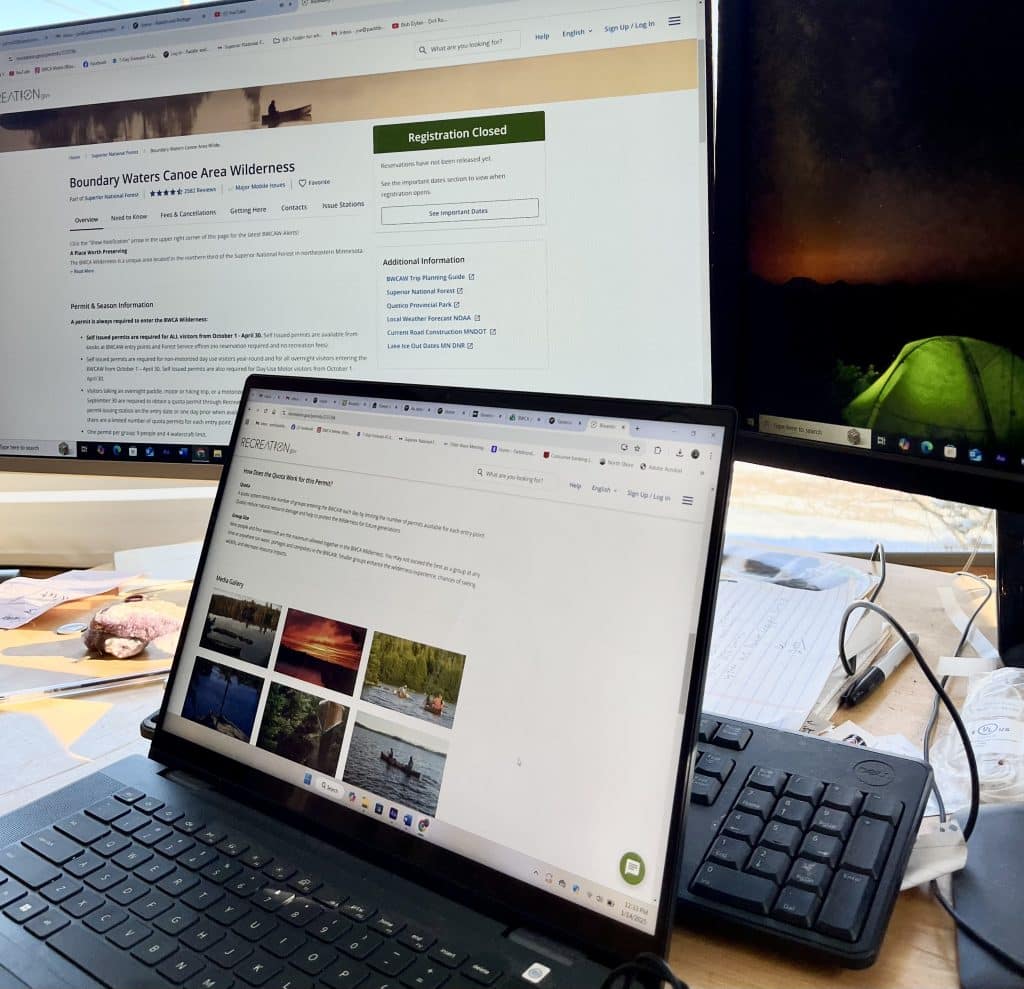
Permits for the BWCA. Photo by Joe Friedrichs
The Forest Service charges a minimum deposit of $32 (equal to two adult recreation fees) when people make an advance reservation for a quota permit. Groups may cancel online anytime up to two days before the entry date for overnight permits. If someone cancels a reservation two or more days prior to entry date, all recreation fees paid will be refunded. A $6 non-refundable reservation fee is not returned regardless of when the permit is canceled. In other words, a group of paddlers can book any number of permits under different names and only risk losing $6 per permit if they cancel within 48 hours of the entry date. The Forest Service is currently proposing to increase the overnight permit fee to $40 per person. There is an open house at the Kawishiwi Ranger Station in Ely Monday, July 14 regarding the proposed permit fee increase. Paddle and Portage will be in attendance and will share a full report on what is discussed and the fee proposal overall, including interviews with outfitters and BWCA paddlers.
Meanwhile, annual visitors increased 2.4% in 2024 over the previous season due to an 11% increase in day use non-motor visitors traveling during quota season from May 1 through Sept. 30.
Last year, 93% of visitors traveled to the BWCA Wilderness from May 1 through Sept. 30 on a quota permit while only 7% of visitors traveled from Oct. 1 through April 30 on a self-issued permit, the Forest Service announced.
Other findings from the report include:
–In 2024, BWCA Wilderness no-shows tallied in at 3,572 in 2024. Of those, 95% were from permits reserved by permit holders, while 5% of no-shows were from permits reserved by commercial issue stations. A “no-show” is a group that makes a reservation and neither uses nor cancels it. The USDA Forest Service retains the entire payment if the group is a no-show.
–Visitor use during non-quota season from Oct. 1 through April 30 increased slightly over five years from 6.8% in 2020 to 7.3% in 2024.
Subscribe to Paddle and Portage to support this type of journalism from and about the Boundary Waters.
Other Recent Articles

Shug the Hammock Camper Diagnosed with Rare Form of Cancer
Shug (right) and M Baxley at the 2025 Winter Camping Symposium. Photo by Joe FriedrichsOur friend Shug found out this week he has a rare blood disease called chronic myeloid leukemia. Shug introduced the joys of hammock camping to people all over the world. His videos...
A Visit to Sigurd Olson’s Listening Point as Senate Nears Vote to Reverse Mining Ban
Photo from inside Sigurd Olson's house in Ely, now the headquarters for the Listening Point Foundation. Photo by Joe FriedrichsA bill that was introduced by a Minnesota Congressman to overturn a 20-year mining ban near the Boundary Waters is heading to the Senate...
Talking Boundary Waters Politics with Candidate for Minnesota Legislature
Joe Friedrichs (left) talks with Minnesota District 3A Candidate Aaron Kania during the Ely Winter Festival. P&P photoFresh off his retirement from the U.S. Forest Service, Aaron Kania announced in January 2026 his candidacy for the Minnesota House of...