


Heidi Rantala, pictured here on the left, became sick with West Nile Virus after an August trip to the BWCA Wilderness. She was in the emergency room in Duluth Sunday, Sept. 7 as a result of the infection. Submitted image
Minnesota Resident Tests Positive for West Nile Virus After Trip to the BWCA Wilderness

By Joe Friedrichs
DULUTH – A resident of this city that is a gateway to the canoe-country wilderness is sick with a rare case of West Nile virus in Minnesota.
Heidi Rantala, 50, was in the emergency room at St. Luke’s Medical Center Sunday, Sept. 7. She is now home and recovering from the virus. She believes she was infected with West Nile while on a canoe trip to the Boundary Waters Canoe Area Wilderness in mid-August, she told Paddle and Portage during a recent interview. Rantala continues to experience body aches, headaches, fatigue, among other symptoms.
Heidi was with a group of five friends on a trip to the BWCA Wilderness in Lake County when she believes she contracted the virus. The group entered at the Kawishiwi Lake entry point.
This is believed to be one of the first confirmed cases of West Nile virus ever reported from the BWCA Wilderness. Rantala’s case is one of only 21 cases of West Nile reported statewide this year, according to the Minnesota Department of Health (MDH).
Of the 21 cases, two of the affected people have died, MDH reports.
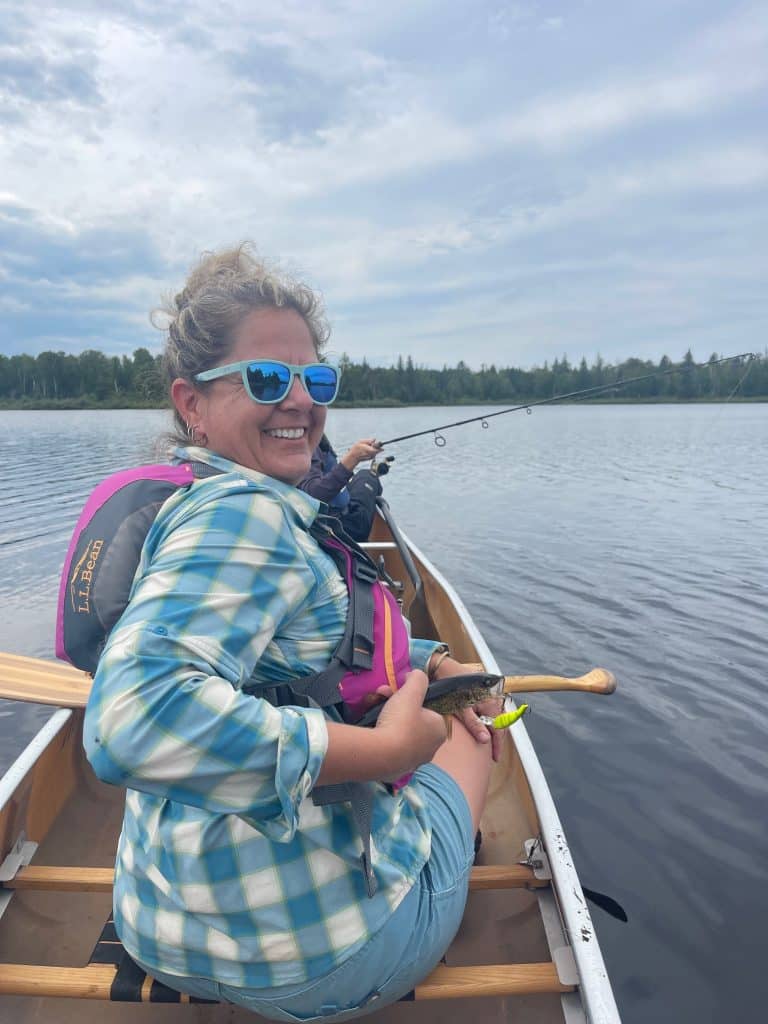
Heidi Rantala in the BWCA Wilderness on the trip where she believes she contracted West Nile Virus. Submitted photo
West Nile virus is transmitted to people through the bite of an infected mosquito. Most people who are bitten by infected mosquitoes will experience either no symptoms or a mild flu-like illness. The virus is not contagious from person to person. Less than 1 percent of people who are infected develop encephalitis or meningitis (inflammation of the brain or surrounding tissues). Symptoms usually show up within one to two weeks. There is no treatment for the illness other than supportive care, according to MDH.
The state health agency reports that during the past 22 years of tracking data, there’ s never been a case of West Nile reported by a Cook County resident, which includes Grand Marais and the Gunflint Trail. There have been fewer than 10 cases reported in both Lake and St. Louis counties during that time, which include Two Harbors and Duluth, respectively. Ely is also in St. Louis County.
Case numbers of West Nile can vary significantly from year to year in Minnesota due to factors like heat and rainfall, but the recent increase in cases of the virus has health officials encouraging people to take precautions now. With a relatively warm forecast this week for the BWCA and temperatures not expected to drop below freezing, it’s likely the mosquito season is not done yet in the canoe-country wilderness.
Elderly people and those with weakened immune systems are at greatest risk for severe disease, followed by people who work outside or participate in outdoor activities like paddling in the BWCA, MDH reports.
In Minnesota, cases of West Nile virus have been found throughout the state. The highest risk areas for West Nile virus include the agricultural regions of western and central Minnesota. Other states in the western and central U.S., including Iowa, North and South Dakota, are also seeing increased activity.
“This is a high-risk time of year for West Nile virus transmission,” said Elizabeth Schiffman, supervisor of MDH’s Vectorborne Diseases Unit. “It’s important to prevent mosquito bites when people are enjoying time outside while the weather is still nice.”
Paddle and Portage spoke with Schiffman about the uptick in cases of West Nile in Minnesota. We also spoke with Heidi Rantala, who remains sick with the virus at this time.
Listen to the latest Paddle and Portage Podcast to hear from Heidi Rantala and Elizabeth Schiffman to learn more about this situation and what it means for BWCA paddlers. Audio below.
Subscribe to Paddle and Portage to support this type of journalism from and about the Boundary Waters.
Other Recent Articles

Forest Service Aims to Increase BWCA Permit Cancellation Costs
Sign at an outfitter in Ely. Photo by Joe Friedrichs BOUNDARY WATERS – It’s a start. That’s been the general sentiment from outfitters and some members of the public regarding the U.S. Forest Service’s plan to increase the cost of cancelling a permit to the Boundary...
Paddlers Embrace Phone Reporting in Quetico, Others Eye NEXUS Program to Replace RABC Permits
The Cache Bay Ranger Station is a southern entrance to Quetico. The results have been positive for a new telephone reporting system set up by the Canada Border Services Agency for people looking to enter Quetico from the park’s southern entrances. The telephone...

Forest Service Enacts Campfire Ban in BWCA Wilderness Starting June 6
A campfire ban for the BWCA Wilderness goes into effect June 6. Photo by Erik Dickes UPDATE: Campfire ban lifted on Friday, June 12. Campfires will once again be allowed as of Friday in the BWCA Wilderness. Original Post: Campfires in the Boundary Waters Canoe Area...