
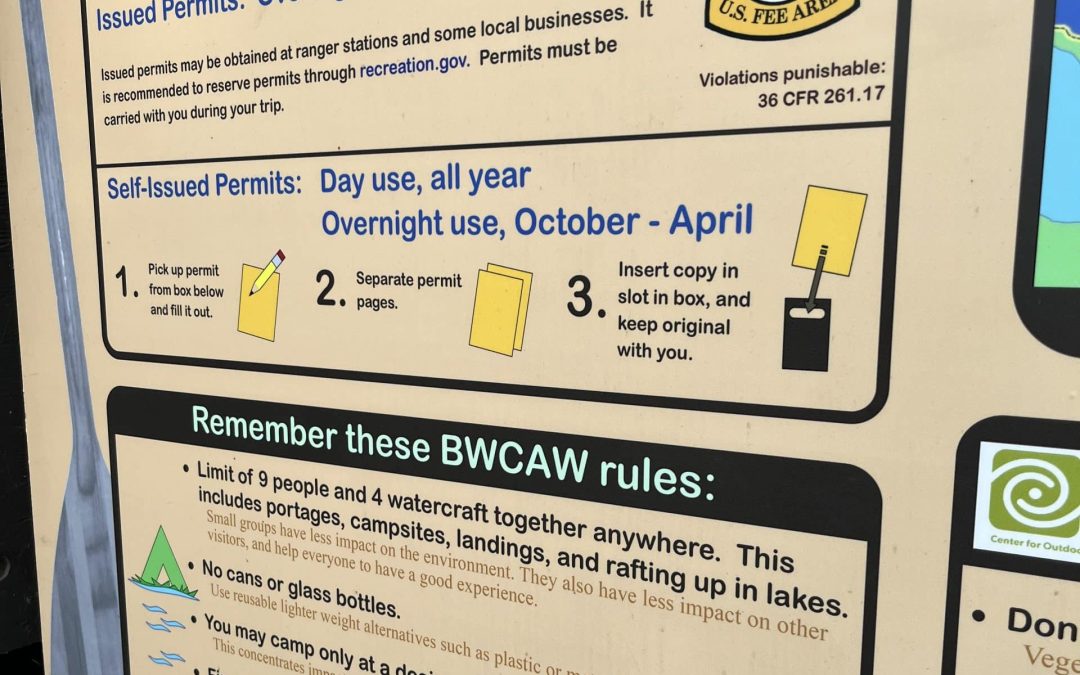
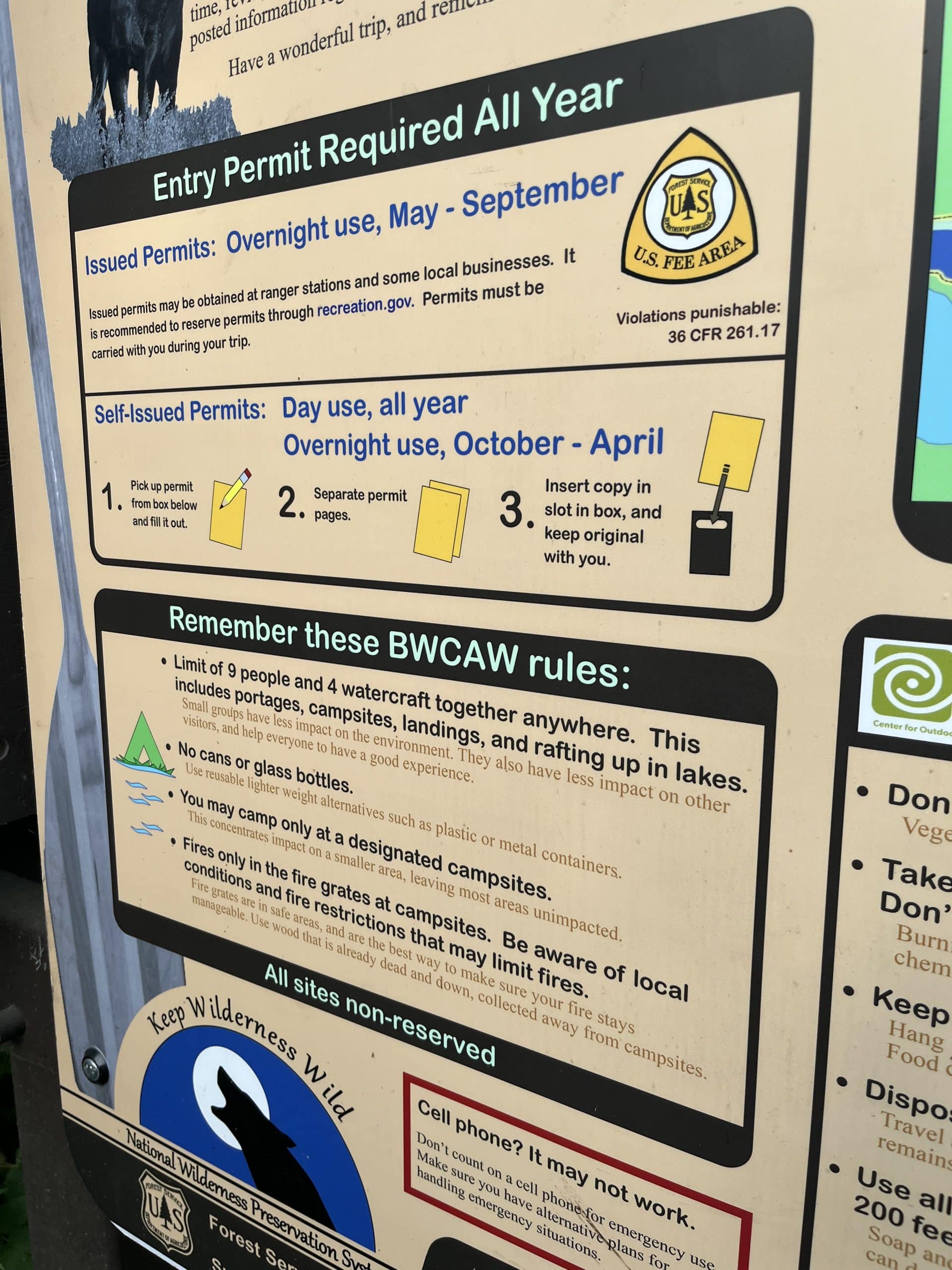
An information kiosk greets visitors to the BWCA at the end of the Arrowhead Trail. Photo by Joe Friedrichs
Analyzing the Numbers: What Rules are Broken in the BWCA Wilderness

By Joe Friedrichs
The Forest Service has issued thousands of tickets to people across the BWCA during the past 23 years. These offenses include people using motors, entering the wilderness on the wrong day of their permit, not having a permit, having illegal campfires, bringing in cans or bottles, and numerous other violations.
WEST PIKE LAKE – It was the white pine that pushed them too far.
In July 2020, officials from the U.S. Forest Service posted a photo of a healthy white pine that was cut down and had fallen into the lake. In an online post, the Forest Service said, “Here’s the next post in our series of what not to do.”
The post said there were violations of the leave-no-trace principles regarding wilderness recreation, as well as rules regarding firewood collection and cutting down live trees.
“Never cut, peel or deface a tree, shrub or pick flowers. It is illegal to damage any living plant,” the statement read.
An uptick in outdoor recreation during the COVID pandemic brought an increase in damage, litter, and questionable behavior to the Boundary Waters Canoe Area Wilderness, according to officials from the U.S. Forest Service.
“(2020) saw unprecedented visitation to the BWCAW and along with that an unacceptably high amount of resource damage, including cutting of live trees, human waste not being properly disposed, trash left in campfire rings, disruptive and oversized groups, and campfires left unattended,” Forest Service officials said in a news release.
And it wasn’t just the pandemic that made people break the rules in the Boundary Waters. Every year, wilderness rangers from the Forest Service hand out an abundance of warnings and tickets to people who break the rules that are in place to “preserve the wilderness experience.” These violations range from people having illegal campfires to bringing cans or bottles into the BWCA. During the past 23 years, thousands of violations have occurred in the most visited wilderness area in the nation: The Boundary Waters.
Paddle and Portage submitted a request July 15 under the Freedom of Information Act to the Forest Service, an agency of the U.S. Department of Agriculture (USDA), regarding ticketed offenses in the BWCA wilderness. We requested information for all “violations in the BWCA wilderness from 2000 to 2023.” During that time frame, approximately 4,500 violations were cited and ticketed. In addition, another 2,250 warnings were issued, while another 2,250 offenses occurred where the Forest Service discovered a violation but did not know who committed the crime/broke the rule.
The most common violation during this time frame, by far, is for people “possessing or using a motor vehicle, motorboat or motorized equipment” in the BWCA. There were 1,294 such violations during the past 23 years, according to the report shared with Paddle and Portage from the federal government. The penalty for taking a motor into the wilderness, which could be a motorboat, gas-powered auger, or snowmobile, is $200. In addition, “Sometimes a mandatory court appearance is required if the officer believes it is warranted, but that usually involves excessive property damage,” according to Joy VanDrie, a public affairs officer for Superior National Forest.
Following the FOIA request, officials from the Forest Service on Superior National Forest helped break down some of the specifics in the data. The FOIA request was completed July 22, arriving from the Forest Service regional FOIA coordinator in Milwaukee.

Food storage order as seen in August 2024 at BWCA entry point. Photo by Joe Friedrichs
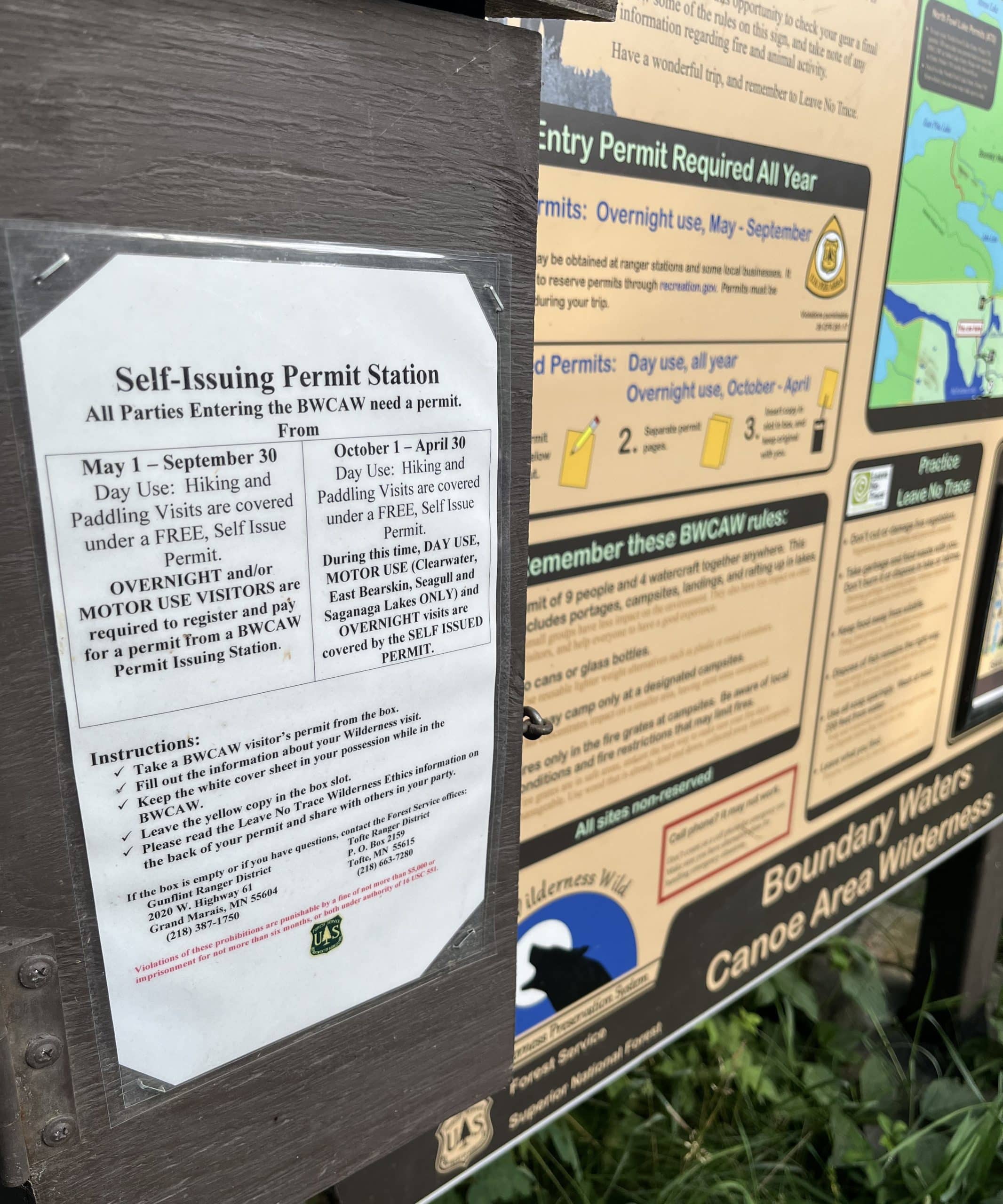
Permits and rules for the BWCA. Photo by Joe Friedrichs
The next most common offense by visitors to the BWCA is for “entering or being in” the wilderness unlawfully. This includes people who don’t have the proper permits to travel in the BWCA. It could be people who enter the Boundary Waters on the wrong day, or who simply don’t have a permit to be in the wilderness. A total of 571 such incidents were reported from 2000 to 2023, according to the information shared with Paddle and Portage. It is a $100 fine for those cited for breaking this rule.
Multiple rules and regulations in the BWCA have made headlines across Minnesota and beyond this year. The first came in May when the Forest Service issued an order that changed requirements for how people store their food in the BWCA. As this is the first year the order is in place where violating the food storage requirements are punishable as a misdemeanor, there is no data available yet for this shift in policy. Furthermore, the Forest Service maintains that unless there is an “egregious” violation of the food storage order that Forest Supervisor Tom Hall signed in May, the likelihood of a ticket being issued was low for 2024. Such leniency is not guaranteed beyond this paddling season. The food storage order stretches from March 1 to November 30 each year.
“Each situation is decided by the officer as to what should be done. It’s a balance that with experience comes wisdom in how to deal with each individual. When a visitor receives their permit, they are receiving a presentation on correct behaviors in the wilderness,” VanDrie told Paddle and Portage. “How well they receive it sometimes is apparent through their statements and actions when an officer checks on them out in the wilderness, thus the officer has to make a decision on the spot on which is the better choice” in terms of more education or a ticket being issued.
Another policy that grabbed the attention of some BWCA user groups is what is commonly referred to as “the leash law.” According to a document released Feb. 6 by officials from Superior National Forest titled “Top 20 FAQs for BWCAW Trip Planning,” dogs here “must be on a 6-foot leash or shorter at all times.”
Despite a rule that clearly states dogs must be on a leash “at all times,” Cathy Quinn, the wilderness program manager on Superior National Forest, said wilderness rangers and law enforcement officers occasionally use violations of the rules as teaching moments. The people who enforce the laws of the BWCA are professionals who take their jobs seriously, Quinn said, and they can make decisions about whether or not to write a ticket based on circumstance, conditions, or other factors. For example, if a dog isn’t digging holes at a campsite, chasing moose through the woods, or biting people on portages, it’s not likely to result in a fine for the pet’s owner if the dog is not on a leash, according to Quinn. Education, not strict enforcement, is an approach the Forest Service leans on for some of the rules that apply to Superior National Forest, she said. According to the information shared with Paddle and Portage for this story, there have been no instances where a ticket was issued for someone having their dog off a leash during the past 23 years.
Meanwhile, despite the thousands of violations and tickets issued by wilderness rangers and law enforcement across the BWCA during the past two decades, the Forest Service maintains that many of the offenses were preventable.
“(The violations) could all be avoided by practicing Leave No Trace, reading the permit materials available, or asking staff at a district office or (a) cooperator,” VanDrie said.
People who visit the BWCA are required to watch three leave-no-trace education videos and review BWCA wilderness rules before they receive their permit during the quota season. In the late fall and winter (between Oct. 1 and April 30) there are no requirements or fees to obtain a permit, including for overnight travel. People can simply show up, fill out a small piece of paper, and go in.
The Forest Service says it “takes a commitment from everyone visiting these treasured lands to ensure that the lakes, waterways and forests of the (Boundary Waters) are protected against resource damage, so the wilderness character is preserved for future generations.”
In reviewing the data sent to Paddle and Portage from the Forest Service, here are some of the other violations that rank high in terms of the number of people who broke the law in the BWCA wilderness between 2000 and 2023. They include:
–464 people were cited for possessing any non-burnable food or beverage containers, including deposit bottles, except for non-burnable containers designed and intended for repeated use.
–394 people were cited disposing of debris, garbage, or other waste.
–213 people cited for building, maintaining, attending or using a fire, campfire, or stove fire (during a campfire ban.)
–176 people cited for using a campsite or other area described in the order by more than the number of users allowed by the order.
Click here to view the full report from the Forest Service.
Paddle and Portage spoke with Cathy Quinn from the U.S. Forest Service about this topic and the findings in the FOIA request. Listen to that audio here.
Support this type of reporting from and about the Boundary Waters by subscribing to Paddle and Portage today.
Other Recent Articles

Missing Hiker Found Alive & Alert at Isle Royale National Park
Isle Royale National Park. P&P file photo A hiker missing at Isle Royale National Park for a week has been found on the remote Lake Superior island. Craig Berg, 70, has been found alive and alert, the National Park Service announced Sept. 12. Berg, missing since...
A Tour of Areas Burned in 2026 BWCA Wildfires
The Sioux River North Entry Point in September 2026. Photo by Joe Friedrichs The fires that shut down the Boundary Waters Canoe Area Wilderness this summer made national news. Paddle & Portage media was invited Sept. 9, along with other members of the press, to...
The Politics of the Boundary Waters Rolls Into September with Candidate Forums in Ely
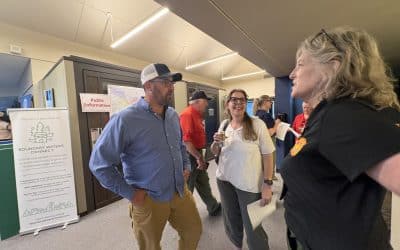
Aaron Kania, left, and Ely Mayor Heidi Omerza (center) talk about the Boundary Waters with a group at the college in Ely. Photo by Joe Friedrichs Mining near the Boundary Waters will be in the political spotlight this month as a pair of political forums take place in...